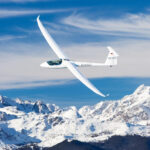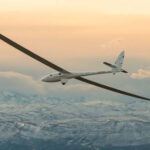


Long before modern aircraft transformed the world, aviation pioneers were already exploring the sky in machines without engines. Their flights were often short, their aircraft were fragile, and the science of flight was still developing. Yet these early experiments helped lay the foundations of modern aviation.
Over the decades, glider pilots have achieved remarkable milestones. Otto Lilienthal demonstrated that controlled gliding flight was possible. The Wright brothers used gliders to develop their understanding of aerodynamics and aircraft control. Later, experienced soaring pilots crossed extraordinary distances, while specially designed research sailplanes climbed into the stratosphere.
These famous glider flights reveal how curiosity, engineering, pilot skill, and an understanding of the atmosphere pushed the boundaries of unpowered flight.
A Timeline of Famous Glider Flights
| Year | Pilot or team | Historical achievement |
|---|---|---|
| 1891 to 1896 | Otto Lilienthal | Conducted pioneering full size glider experiments and repeated gliding flights |
| 1900 to 1902 | Wilbur and Orville Wright | Tested gliders and developed improved aerodynamic knowledge and aircraft controls |
| 1903 | Wright brothers | Used knowledge from earlier glider experiments to develop their first successful powered airplane |
| 2003 | Klaus Ohlmann | Recorded a 2,247.6 km FAI recognized free out and return gliding distance |
| 2006 | Steve Fossett and Einar Enevoldson | Reached 15,460 m in the Perlan 1 research glider |
| 2017 | Jim Payne and Morgan Sandercock | Reached 15,902 m in Perlan 2, setting a new altitude milestone |
| 2018 | Perlan 2 flight teams | Continued breaking the project’s own altitude milestones |
| 2018 | Jim Payne and Timothy Gardner | Established the FAI recognized glider absolute altitude record of 22,657 m |
One important distinction: the Wright Flyer of 1903 was a powered airplane, not a glider. It belongs in this story because the Wright brothers’ earlier glider experiments helped them develop the technology and control methods needed for powered flight.
1. Otto Lilienthal’s Pioneering Glider Flights, 1891 to 1896
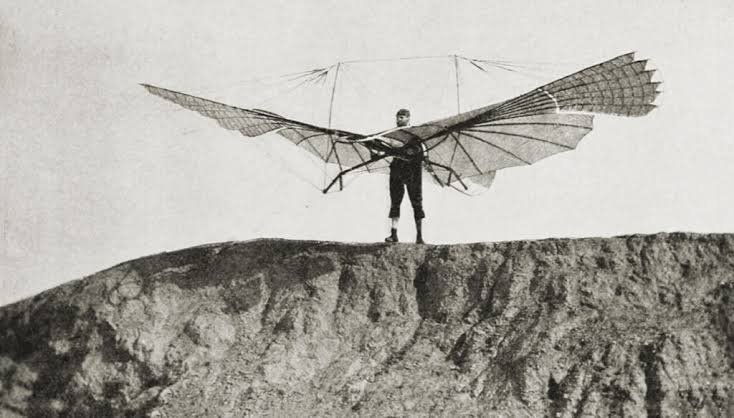
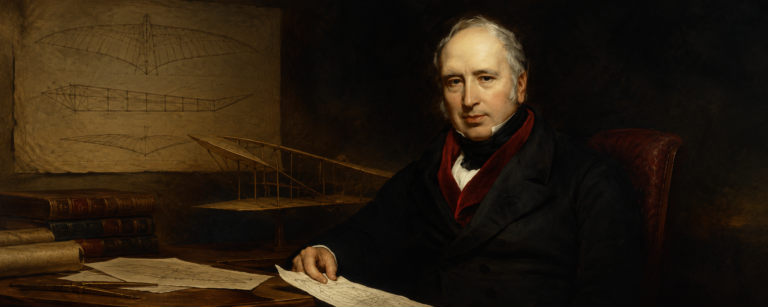
German engineer Otto Lilienthal was one of the most influential pioneers in the early history of human flight.
During the late nineteenth century, inventors around the world were investigating how a person might fly in a heavier than air machine. Lilienthal went beyond theoretical study by designing and testing full size gliders that carried a pilot.
From 1891 until his death in 1896, Lilienthal conducted repeated gliding experiments. His aircraft relied on the pilot shifting body weight to influence control. He also studied the aerodynamic forces acting on curved wings and published important findings about lift.
His work demonstrated that human gliding flight could be repeated under suitable conditions. This was a major step toward practical aviation.
Lilienthal’s flights were generally short compared with modern soaring journeys. Their importance was not their distance but what they proved: carefully designed wings could carry a person through the air in a controlled glide.
His experiments influenced later aviation pioneers, including Wilbur and Orville Wright, who studied his published work.
Why it mattered: Lilienthal helped turn human flight from a theoretical ambition into a practical experimental discipline.
Read more: Smithsonian National Air and Space Museum: Lilienthal Glider
2. The Wright Brothers’ 1900 Glider Experiments
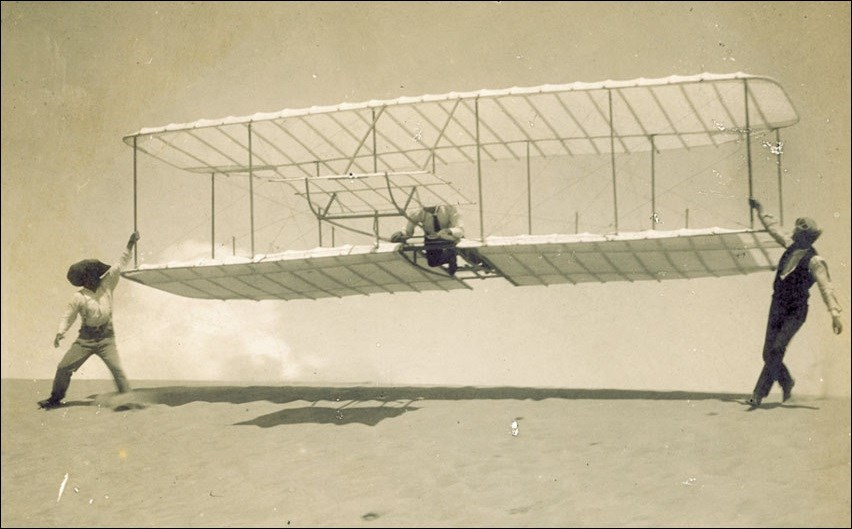
Wilbur and Orville Wright began their glider experiments at Kitty Hawk, North Carolina, in 1900. The area’s open sandy terrain and steady coastal winds made it a useful location for testing their designs.
The brothers were particularly interested in solving a difficult problem: how to control an aircraft reliably in flight.
Their 1900 glider was tested both as a kite and as a piloted aircraft. These experiments helped them study wing behavior, control, and the effects of wind.
The results were not perfect. The brothers still needed better aerodynamic information and more effective control. Rather than abandoning their plans, they used the experience to refine their next design.
This method of testing, observing, and improving became a defining part of their work.
Why it mattered: The 1900 campaign marked the beginning of the Wright brothers’ systematic full size glider experiments, which would eventually contribute to powered flight.
Read more: Smithsonian National Air and Space Museum: Researching the Wright Way
3. The Wright Brothers’ 1901 Glider and an Unexpected Setback
The Wright brothers returned to Kitty Hawk in 1901 with a larger glider. They expected its wings to produce enough lift for better performance, but the results were disappointing.
Their experience exposed problems with the aerodynamic data they had been using. Instead of simply building another aircraft based on the same assumptions, the brothers decided to investigate the science more carefully.
Back in Dayton, Ohio, they constructed a wind tunnel and tested numerous small wing models. These experiments helped them develop more reliable aerodynamic measurements and make better design decisions.
The setback was an important turning point. It encouraged the Wrights to rely on their own measurements rather than depending entirely on published information that did not match their observations.
Why it mattered: The 1901 glider campaign showed that scientific testing and correcting incorrect assumptions were essential to developing successful aircraft.
Read more: Smithsonian National Air and Space Museum: Researching the Wright Way
4. The Wright Brothers’ 1902 Glider: A Major Advance in Control
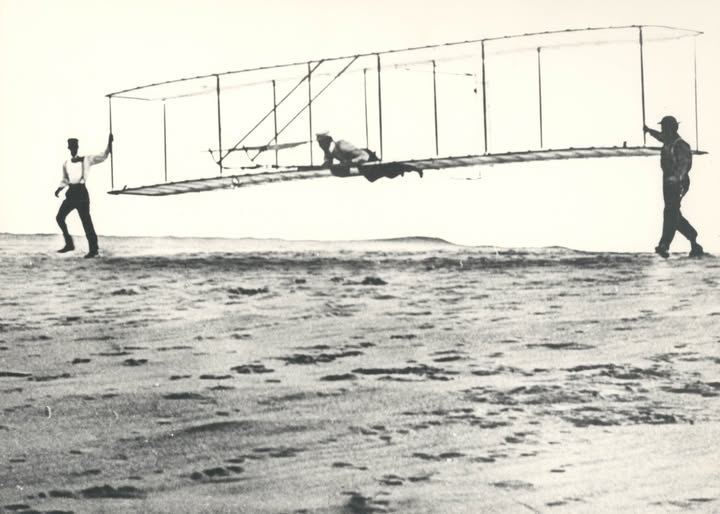
The Wright brothers’ 1902 glider represented a major improvement over their earlier designs.
Using the aerodynamic information gathered from their wind tunnel tests, they developed longer, narrower wings and refined the aircraft’s control system. The glider used wing warping for lateral control, a forward elevator for pitch control, and a movable rear rudder to improve directional control.
The combination made the aircraft substantially more controllable than their earlier gliders.
During the 1902 campaign, the brothers carried out hundreds of glides. The experience helped them understand how the aircraft responded to control inputs and how its design could be improved.
The glider did not have an engine. Its importance lay in its aerodynamic design and control system, which formed the foundation for the powered airplane they developed next.
Why it mattered: The 1902 glider brought the Wright brothers closer to achieving controlled powered flight by helping them solve key problems in aircraft stability and maneuverability.
Read more: Smithsonian National Air and Space Museum: The Wright Brothers’ Glider Research
5. The Wright Flyer, 1903: From Glider Research to Powered Flight
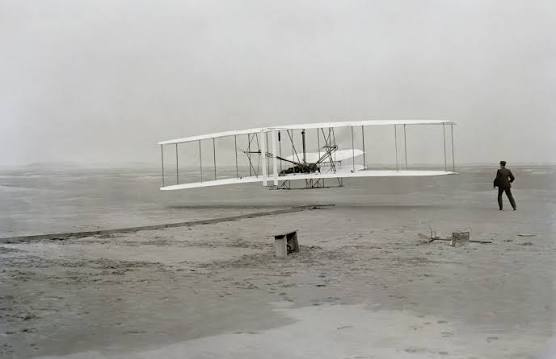
On December 17, 1903, Orville Wright piloted the Wright Flyer at Kitty Hawk, North Carolina, in what the Smithsonian describes as the first successful powered flights of a heavier than air flying machine.
The first flight lasted 12 seconds and covered approximately 36 meters, or 120 feet. Three additional flights took place that day. The longest, piloted by Wilbur Wright, covered approximately 255.6 meters, or 852 feet, in 59 seconds.
The Wright Flyer was not a glider. It used an engine and propellers to provide thrust.
However, the airplane was the result of years of work with unpowered gliders. Those earlier flights helped the brothers understand lift, control, and the behavior of an aircraft in the air.
The Wright story illustrates how gliding experiments helped advance powered aviation. The transition from glider to airplane required more than an engine. It also required a controllable aircraft with an effective aerodynamic design.
Why it mattered: The Wright brothers’ earlier glider research contributed to the development of their historic powered airplane.
Read more: Smithsonian National Air and Space Museum: 1903 Wright Flyer
6. Klaus Ohlmann’s 2,247.6 km Out and Return Flight, 2003
Modern soaring demonstrates just how far a glider can travel when the aircraft, pilot, and weather work together.
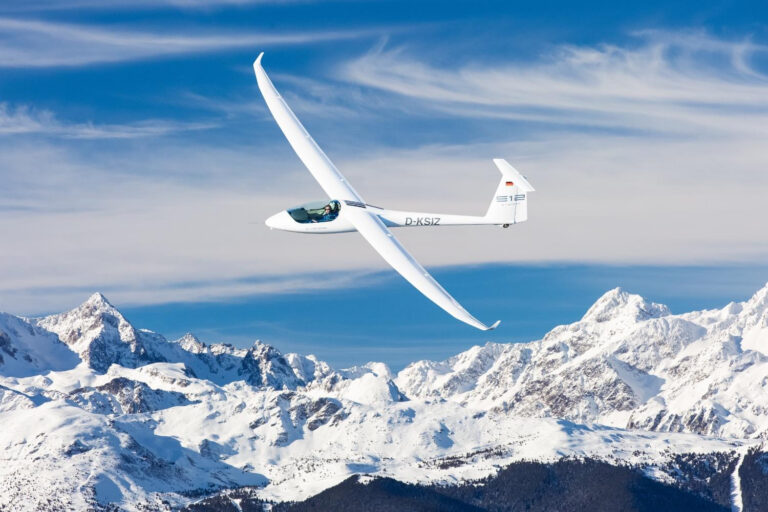
On December 2, 2003, German pilot Klaus Ohlmann recorded an FAI recognized free out and return gliding distance of 2,247.6 kilometers.
An out and return flight requires a pilot to fly away from a designated starting point and return according to the rules of the relevant record category. It is a different achievement from simply traveling a long distance in one direction.
Such flights require careful planning and the ability to identify and use rising air. Pilots must manage altitude, choose efficient routes, monitor changing weather, and make decisions about whether conditions remain suitable for continuing.
Ohlmann is widely associated with high performance cross country soaring, particularly in mountain environments where atmospheric lift can support exceptionally long flights.
His record illustrates the extraordinary potential of modern sailplanes. Although a glider gradually loses altitude in still air, rising air can provide the energy needed to continue a long journey.
Why it mattered: The flight demonstrated the long distance potential of modern sailplanes and the importance of meteorology, navigation, and pilot judgment.
Official record source: FAI: International Gliding Records
7. Perlan 1 Reaches 15,460 m, 2006
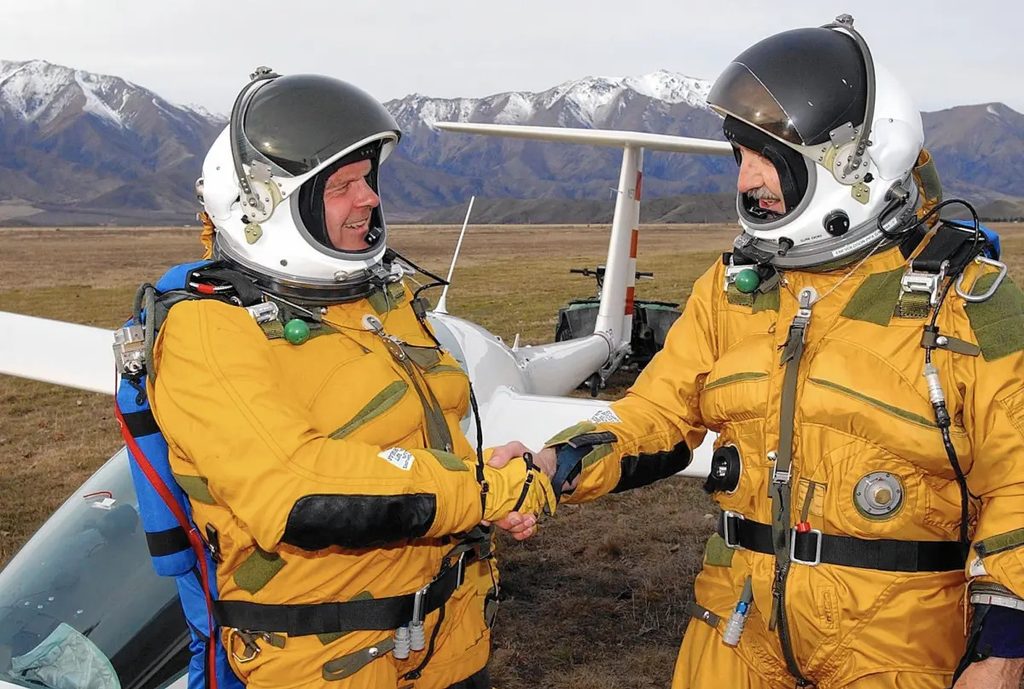
In August 2006, Steve Fossett and Einar Enevoldson achieved a landmark in high altitude gliding by reaching 15,460 meters in the Perlan 1 research glider.
The project explored an ambitious idea: could a glider use powerful atmospheric waves generated by mountain ranges to reach altitudes far beyond those associated with ordinary recreational soaring?
Patagonia, in southern Argentina, offered conditions suitable for investigating this possibility. Under the right circumstances, strong winds flowing over the Andes can generate mountain waves that extend high into the atmosphere.
Perlan 1 was a modified glider built for this specialized mission. Its pressurized cockpit helped protect the pilots from the extreme conditions at high altitude.
The achievement demonstrated that gliders could exploit atmospheric energy to reach the lower stratosphere. It also helped establish the scientific and engineering foundation for Perlan 2.
Why it mattered: Perlan 1 demonstrated the potential of stratospheric soaring and helped turn an ambitious research concept into a proven capability.
Official source: FAI: Twenty Years Since Perlan 1 Soared to the Edge of the Stratosphere
8. Perlan 2 Breaks New Ground in 2017
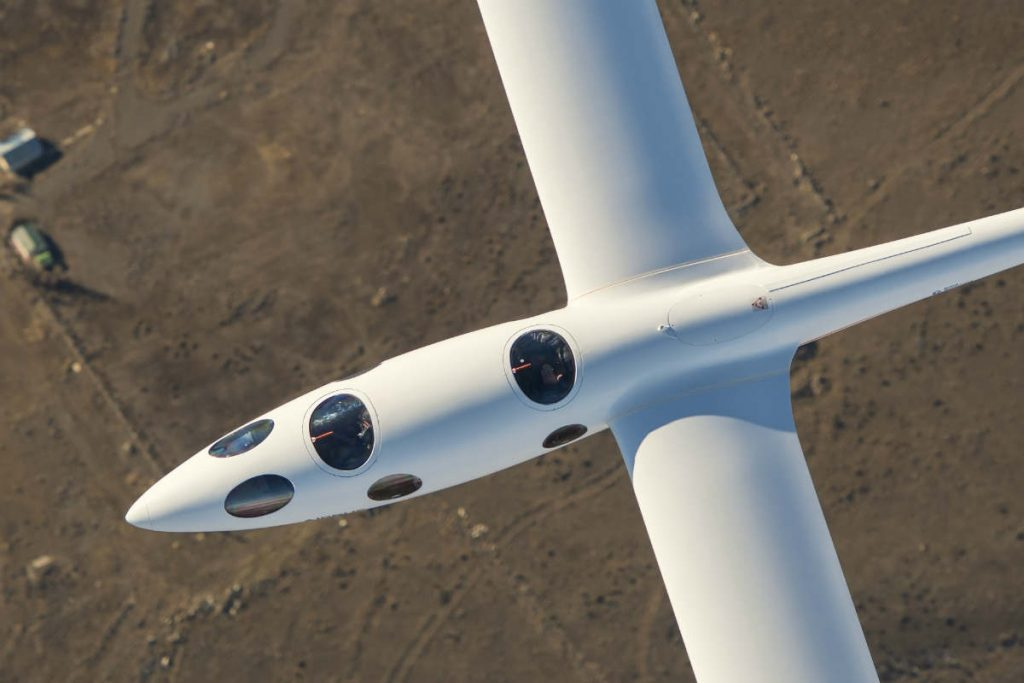
Perlan 1 demonstrated that extreme altitude soaring was possible, but the project’s team wanted to climb higher.
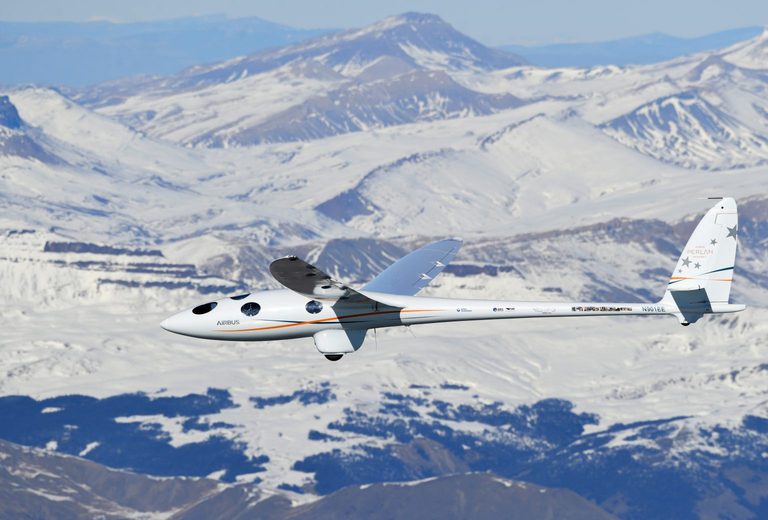
The result was Perlan 2, a purpose built research glider designed to investigate the upper atmosphere. It incorporated a pressurized cockpit and specialized systems for operating where the air is extremely thin.
In September 2017, pilots James Payne and Morgan Sandercock reached 15,902 meters according to the FAI’s historical record of the Perlan program.
The flight broke the altitude milestone established by Perlan 1 and showed that a specially designed sailplane could climb even higher using natural atmospheric waves.
The achievement was not simply about reaching a greater number on an altimeter. It also provided an opportunity to study the atmospheric conditions that make extreme altitude soaring possible.
Why it mattered: Perlan 2 demonstrated that specialized sailplane design could push the limits of high altitude gliding beyond the earlier Perlan 1 achievement.
Official source: FAI: Perlan High Altitude Glider Flights
9. Perlan 2 Reaches 22,657 m, 2018
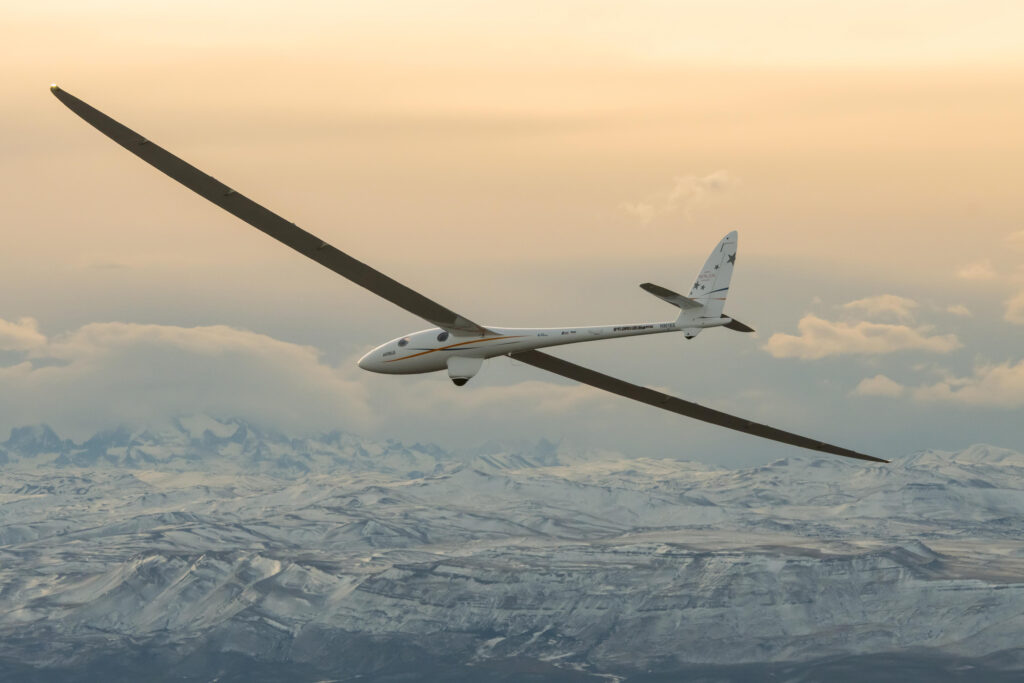
The Perlan project reached its best known milestone in 2018.
On September 2, the FAI marked the record set by the Perlan 2 research glider, which reached 22,657 meters above sea level in Patagonia, Argentina. The pilots were Jim Payne and Timothy Gardner.
This altitude is approximately 74,334 feet. The flight established the FAI recognized absolute altitude record for a glider.
The achievement depended on powerful stratospheric mountain waves, specialized aircraft engineering, and careful flight planning. At such altitudes, the atmosphere is extremely thin and the environment presents serious physiological challenges.
Perlan 2’s pressurized cockpit and life support equipment were essential to the mission. The aircraft was built for research and extreme altitude flight, rather than ordinary recreational soaring.
The project demonstrated how natural atmospheric energy could carry a glider into an environment normally associated with specialized high altitude aircraft.
Why it mattered: The Perlan 2 flight remains one of the most remarkable achievements in gliding, showing how engineering and atmospheric science can extend the limits of unpowered flight.
Official source: FAI: The Highest Altitude Ever Reached by a Glider
What Made These Historic Flights So Important?
These flights happened in different eras and achieved different goals, but each expanded our understanding of aviation.
| Historic flight or campaign | Main contribution |
|---|---|
| Otto Lilienthal’s glider experiments | Demonstrated practical, repeatable human gliding flight |
| Wright brothers’ early gliders | Improved aerodynamic knowledge and aircraft control |
| Wright brothers’ 1902 glider | Established an important foundation for their powered aircraft |
| Wright Flyer, 1903 | Achieved the first successful powered, controlled flights of their airplane |
| Klaus Ohlmann’s 2003 flight | Demonstrated extraordinary cross country distance performance |
| Perlan 1, 2006 | Proved the potential of high altitude atmospheric wave soaring |
| Perlan 2, 2017 and 2018 | Advanced the altitude limits of specialized research gliders |
The achievements also reveal that aviation progress does not depend on engine power alone. Aerodynamics, careful experimentation, weather, engineering, and pilot skill all play essential roles.
How Can a Glider Fly Such Long Distances or Reach Extreme Altitudes?
A glider normally loses altitude while moving forward through the air. To remain airborne for a long time or climb relative to the ground, it must find rising air or another suitable source of energy.
Thermals form when the sun heats the ground and warm air rises. Ridge lift occurs when wind is forced upward by terrain. Mountain waves can produce powerful rising air that extends far above the mountains themselves.
Pilots learn to identify these conditions and use them efficiently. They must also consider wind, aircraft performance, navigation, and the possibility of needing to land.
High altitude research gliders such as Perlan 2 operate under very different conditions from ordinary club sailplanes. Their design, pressurization, life support systems, and mission planning are tailored to the extreme environment in which they fly.
Frequently Asked Questions About Famous Glider Flights
Final Thoughts
The history of gliding is a story of persistence, scientific curiosity, and the search for better ways to fly.
Otto Lilienthal helped demonstrate that human gliding flight was possible. The Wright brothers used their gliders to investigate the difficult problem of aircraft control. Modern soaring pilots showed that sailplanes could travel remarkable distances, while the Perlan project explored extraordinary altitudes made possible by atmospheric waves.
Each achievement represents a different stage in aviation’s development. Together, they explain why gliders remain an important part of aviation history and why soaring continues to inspire pilots around the world.
For more stories about sailplanes, pioneering pilots, flight techniques, and aviation records, explore the history and learning guides on Glider Airstrip.