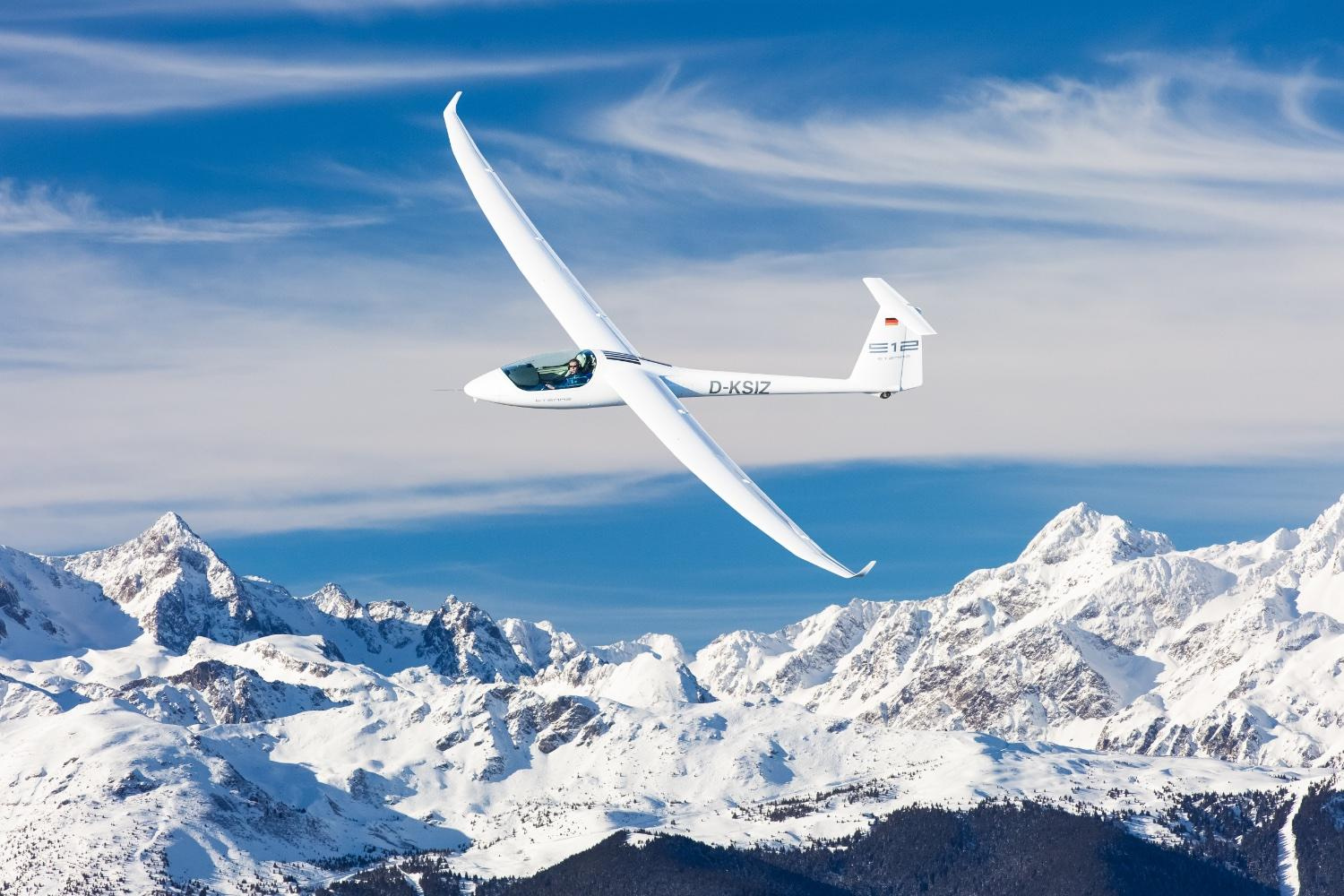

Gliders are among the most fascinating aircraft in aviation. They can travel across vast landscapes, climb thousands of feet without an engine, and use invisible currents of rising air to remain airborne for hours.
But how do they fly without engine power? How can a glider climb when gravity constantly pulls it downward? And how did a specially designed sailplane reach an altitude of more than 22,000 meters?
Whether you are an aviation enthusiast, a student learning about flight, or an experienced soaring pilot, these 25 interesting facts about gliders and soaring reveal the science, technology, and skill behind unpowered flight.
1. Gliders Can Fly Without an Engine
A conventional glider does not need an engine to remain airborne. Instead, it moves through the air while gradually losing altitude relative to the surrounding air mass.
Its wings generate lift as the aircraft moves forward. The glider converts gravitational potential energy into motion, allowing it to continue flying even without engine thrust.
Some gliders are equipped with engines for self-launching or extending a flight, but a pure glider relies on other ways to get airborne and sustain its flight.
2. Gliders Can Climb Without an Engine
One of the most surprising facts about soaring is that a glider can gain altitude without producing thrust.
The secret is rising air. If the surrounding air moves upward faster than the glider descends through it, the aircraft can climb relative to the ground.
Pilots search for these rising air currents and use them to gain altitude. The aircraft itself does not need to generate engine power to climb.
3. There Are Three Classic Sources of Lift Used in Soaring
Glider pilots commonly use three main types of atmospheric lift:
- Thermal lift: Rising air created when the sun heats the ground and the air above it.
- Ridge lift: Air forced upward when wind encounters a hill, ridge, or mountain slope.
- Mountain wave lift: Rising air associated with atmospheric waves that form when wind flows over mountainous terrain under suitable conditions.
Each type of lift works differently. Skilled pilots learn to recognize the weather and terrain conditions that make each one useful.
4. The Sun Helps Power Many Glider Flights
Thermal soaring begins with solar heating.
Different surfaces absorb and release heat at different rates. When the ground warms the air above it, some of that air becomes buoyant and rises. Under suitable conditions, the rising air forms a thermal that a glider pilot can use to climb.
This is why sunny weather often creates good opportunities for thermal soaring. However, sunshine alone does not guarantee strong or usable thermals. Moisture, wind, atmospheric stability, and terrain all influence the conditions.
5. Gliders Can Soar for Hours
A glider does not have to land shortly after its launch. If the weather provides sufficient lift, a pilot can remain airborne for hours.
Thermals, ridge lift, and mountain waves can help the aircraft regain altitude and continue its journey. Long flights require careful navigation, weather awareness, energy management, and good decision-making.
The duration of a flight depends on the aircraft, the pilot, the available lift, and the conditions on the day.
6. Some Gliders Have Glide Ratios Greater Than 50:1
A glider’s glide ratio describes how far it can travel horizontally compared with how much altitude it loses in still air under specified conditions.
For example, a glide ratio of 50:1 means an aircraft can theoretically travel 50 units horizontally for every unit of altitude lost.
High performance sailplanes can achieve glide ratios greater than 50:1 under favorable flight conditions. This does not mean they can always travel that distance over the ground. Wind, aircraft loading, speed, and the need to maneuver or land all affect the result.
7. Gliders Can Fly Faster Than the Wind
A common misconception is that a glider must travel in the same direction as the wind.
In reality, an aircraft moves through the surrounding air, while its movement over the ground also depends on the wind. Gliders can travel upwind, downwind, or across the wind.
A sailplane’s airspeed and groundspeed are not the same. A headwind reduces groundspeed, while a tailwind increases it, assuming the same airspeed and direction of flight.
This is one reason pilots pay close attention to wind when planning cross-country flights.
8. Mountain Waves Can Carry Gliders to Extraordinary Altitudes
When strong winds flow over mountains, they can create atmospheric waves that extend far above the terrain. Under suitable conditions, these waves produce powerful regions of rising air.
Glider pilots can use mountain wave lift to climb far beyond the height of the mountains themselves.
However, mountain wave flying demands specialized knowledge and careful preparation. Turbulence, strong winds, icing, and extreme altitude conditions can create serious hazards.
9. A Glider Reached 22,657 Meters Above Sea Level
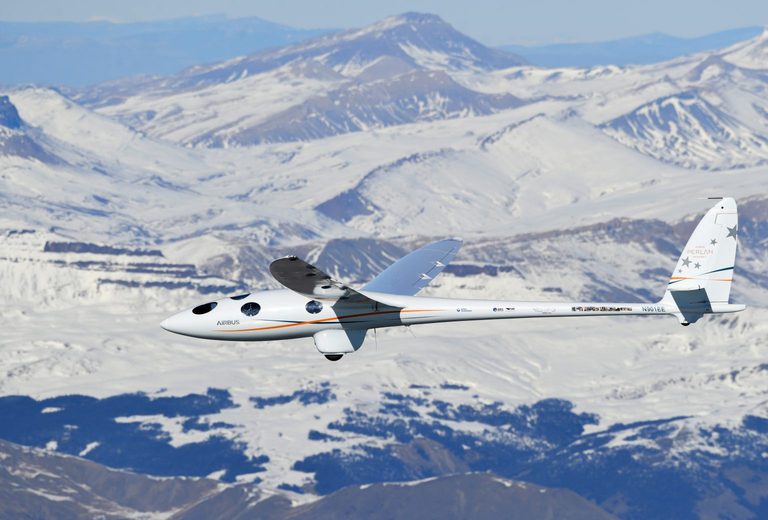
On September 2, 2018, the Perlan 2 research glider reached an altitude of 22,657 meters, or approximately 74,334 feet, setting the FAI recognized absolute altitude record for a glider.
The flight took place near El Calafate in Patagonia, Argentina. Pilots Jim Payne and Timothy Gardner flew the specially designed, pressurized aircraft using powerful stratospheric mountain waves.
This was not an ordinary club sailplane flight. Perlan 2 was engineered for high altitude research, where the air is extremely thin and the environment is hostile to humans without specialized life support.
Official source: FAI: Perlan 2 altitude record
10. High Altitude Gliding Can Reach the Armstrong Line
The Armstrong Line is commonly placed at an atmospheric pressure corresponding to an altitude of approximately 19,000 meters, or 63,000 feet, under standard atmospheric conditions.
Above this level, exposed body fluids can begin to boil at normal body temperature because the surrounding pressure is extremely low. This does not mean the body instantly boils away, but it illustrates the extreme physiological danger.
Perlan 2 was designed with a pressurized cockpit and specialized life support equipment for high altitude research. Its record flights demonstrated how far purpose built gliders can operate beyond ordinary recreational soaring altitudes.
11. The Wright Brothers Used Gliders Before Their Powered Flights
Wilbur and Orville Wright did not begin their aviation work with successful powered flight. They conducted extensive experiments with gliders to understand lift, control, and aerodynamic behavior.
Their glider experiments helped them develop the knowledge and skills needed for their pioneering powered flights in 1903.
This is an important part of aviation history: unpowered flight was not merely a recreational activity but also a major step in the development of practical airplanes.
12. A Glider’s Wings Are Designed for Efficient Flight
Many sailplanes have long, slender wings. This design helps reduce induced drag, which is associated with producing lift.
Reducing drag is important because a glider has no engine thrust to overcome it continuously. Efficient wings allow the aircraft to travel farther while losing less altitude under suitable conditions.
Wing design is only one part of overall performance. The fuselage, surface finish, aircraft weight, control settings, and flight speed also matter.
13. Gliders Still Experience Lift, Drag, and Weight
A pure glider has no engine thrust, but it still experiences the main aerodynamic forces.
- Lift acts perpendicular to the relative airflow.
- Drag acts opposite the direction of movement through the air.
- Weight acts toward the center of the Earth.
During flight, the glider trades altitude for forward motion. When rising air provides enough upward movement, the aircraft can gain altitude relative to the ground.
Understanding these forces helps explain why a glider can fly efficiently but cannot simply remain at one altitude indefinitely in still air without an external source of energy.
14. Gliders Need a Way to Launch
Most conventional sailplanes cannot take off from a standstill under their own power. They need an initial launch method.
Two common methods are:
Aerotow: A powered aircraft pulls the glider into the air using a tow rope. The glider releases the rope at the planned altitude.
Winch launch: A powerful ground based winch pulls a cable attached to the glider, accelerating it into a steep climb.
Some locations also use other launch methods, depending on local facilities and terrain. Self launching motor gliders are a separate category because they can use an onboard engine for takeoff.
15. Glider Pilots Use Instruments to Find Rising Air
A variometer is an important instrument in soaring aircraft. It indicates the aircraft’s rate of climb or descent.
When a glider enters rising air, the variometer helps the pilot identify whether the aircraft is gaining or losing altitude and how quickly.
Modern sailplanes may also use GPS navigation, flight computers, moving maps, and other instruments. These tools support navigation and flight planning, but pilots still need to interpret the weather and make safe decisions.
16. Spoilers Help Gliders Control Their Descent
Many sailplanes use spoilers or airbrakes to increase drag and reduce lift when required.
These devices help pilots manage their descent angle, control the approach to landing, and avoid floating too far along the runway.
They are especially useful because a high performance glider may travel a considerable distance while losing altitude. Spoilers allow the pilot to adjust the glide path more effectively.
Different aircraft have different designs, so pilots must understand the specific controls and procedures for the glider they are flying.
17. Water Ballast Can Improve Performance in Some Conditions
Some high performance sailplanes carry water ballast in tanks, often within their wings.
Adding ballast increases the aircraft’s weight. At suitable higher cruising speeds, this can improve cross-country performance by allowing the glider to fly faster for a given operating strategy.
However, water ballast is not an automatic performance improvement in every situation. The extra weight affects handling and low speed performance, and the pilot must remain within the aircraft’s approved limits.
Pilots also need to consider weather, landing requirements, and the aircraft flight manual before using ballast.
18. Clouds Can Give Pilots Clues About Rising Air
Certain cloud formations can reveal atmospheric conditions useful for soaring.
For example, cumulus clouds can develop where moist air rises and cools. On suitable days, their formation may help pilots identify areas of thermal activity.
However, not every cloud indicates useful lift, and some clouds can signal hazardous weather. Cloud appearance must be interpreted alongside forecasts, visibility, wind, and the wider atmospheric situation.
Experienced pilots learn to read the sky, but they never rely on cloud shape alone to make safety decisions.
19. Ridge Soaring Can Keep a Glider Flying Along a Hillside
When wind encounters a ridge or slope, part of the airflow is deflected upward. A glider can use this rising air by flying along the windward side of the terrain.
This is known as ridge soaring.
Unlike thermal soaring, which depends on rising pockets of warm air, ridge soaring relies primarily on wind and terrain. Its effectiveness depends on the direction and strength of the wind, the shape of the ridge, and local turbulence.
Ridge soaring can support extended flights, but pilots must maintain safe separation from terrain and respect the limitations of the site.
20. Convergence Lift Can Create Another Soaring Opportunity
Convergence occurs when airflows meet or come together, forcing air upward in certain atmospheric conditions.
Glider pilots may be able to use this rising air to maintain altitude or climb. Convergence lines can sometimes support long cross-country flights without requiring the pilot to circle continuously in individual thermals.
The location and strength of convergence lift can change throughout the day. Recognizing it requires an understanding of local weather, terrain, and wind patterns.
21. Glider Pilots Can Fly Cross Country for Hundreds of Kilometers
Gliding is not limited to flying around the local airfield.
When lift and weather conditions are favorable, pilots can travel long distances across the countryside. They plan routes between areas of lift, monitor their altitude, and consider where they could safely land if conditions change.
Cross-country soaring combines meteorology, navigation, aircraft performance, and decision-making. A successful flight depends on more than simply finding a strong thermal.
Some flights also form part of official distance and speed record attempts.
22. Modern Sailplanes Can Have Retractable Landing Gear
Some high performance sailplanes use retractable landing gear to reduce aerodynamic drag during flight.
When the gear is retracted, the aircraft can have a cleaner external shape than it would with the wheels exposed. This can contribute to aerodynamic efficiency.
Not every glider has retractable gear. Training gliders and some other designs use fixed landing gear because simplicity, durability, and operating requirements are also important considerations.
23. Gliding Is an International Sport
Gliding is practiced across Europe, North America, Oceania, and many other parts of the world.
National organizations support clubs, training, competitions, and pilot development. The Fédération Aéronautique Internationale (FAI) oversees international air sport records and works with its relevant commissions, including the International Gliding Commission.
The sport includes recreational flying, cross-country soaring, aerobatics, and competitive events. Pilots from different countries can share a common interest in weather, aircraft performance, and the challenge of unpowered flight.
Official source: FAI International Gliding Commission
24. Gliders Can Be Used for Scientific Research
Some gliders are designed for more than recreational flying or sport. Specialized research aircraft can investigate atmospheric conditions, high altitude flight, and the behavior of air at extreme elevations.
Perlan 2 is a notable example. Its high altitude flights have helped researchers explore the stratosphere and investigate the atmospheric wave conditions that make such flights possible.
These aircraft are very different from ordinary club sailplanes. Their pressure systems, life support equipment, and research goals require specialized engineering and operational procedures.
25. Soaring Combines Science, Skill, and Patience
Perhaps the most interesting fact about gliding is that success depends on the relationship between the aircraft, the pilot, and the atmosphere.
A pilot needs to understand aerodynamics, recognize rising air, manage energy, plan routes, and make safe decisions as conditions change.
Technology helps, but the weather remains a major part of the experience. Two flights in the same aircraft can be very different because the atmosphere is never exactly the same.
That combination of science, judgment, and exploration is what makes soaring so compelling to pilots around the world.
Why Gliders and Soaring Continue to Fascinate Pilots
Gliders show how much can be achieved without continuous engine power. By combining efficient aircraft design with knowledge of the atmosphere, pilots can climb in rising air, travel long distances, and explore the sky in a uniquely engaging way.
From a local training flight to a record breaking stratospheric mission, soaring connects the basic principles of flight with some of aviation’s most remarkable achievements.
For anyone interested in learning more, a great next step is to explore the science of thermal lift, discover the history of sailplanes, or visit a local gliding club and experience an introductory flight.
Frequently Asked Questions About Gliders and Soaring
Explore More About Gliding
At Glider Airstrip, we share stories, educational guides, aviation history, and interesting facts about sailplanes and soaring. Explore our other articles to learn how gliders fly, how pilots use thermals, and how the sport has developed over time.