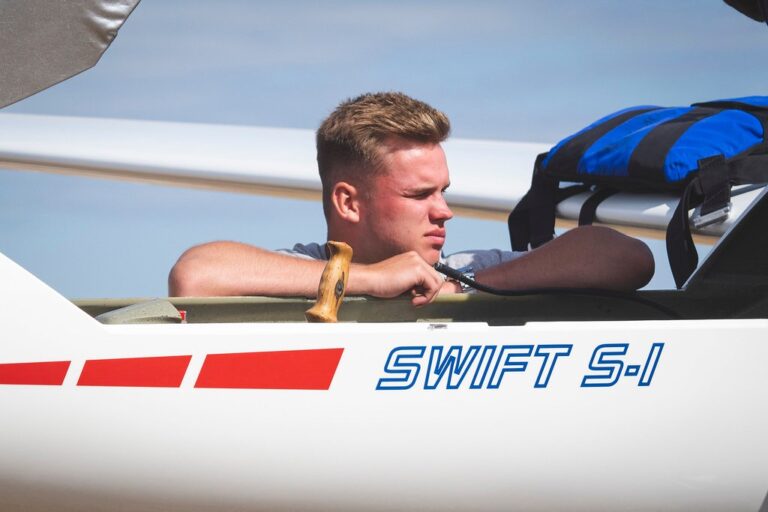


Some pilots spend a lifetime mastering the art of flight. Others turn that experience into something extraordinary. Gúnar Armin Halboth is a Brazilian pilot whose journey has taken him from learning to fly gliders as a teenager to aerobatic competition, commercial aviation, and the pursuit of world speed records in experimental aircraft.
His achievements include four world records with the CEA-308 in 2010 and five more with the CEA-311 Anequim in 2015. Behind those numbers is a story of technical curiosity, collaboration with engineers, and a willingness to take on demanding aviation projects.
A Passion for Flight That Began Young
Halboth began his gliding journey in Brazil as a teenager. At 16, he started flying gliders at the Juiz de Fora Aero Club and earned his glider pilot licence. He flew the Blaník L-13, in which he made his first solo flight. Learning to fly at such a young age gave him an early foundation in aircraft handling, energy management, and the relationship between a pilot and an aircraft.
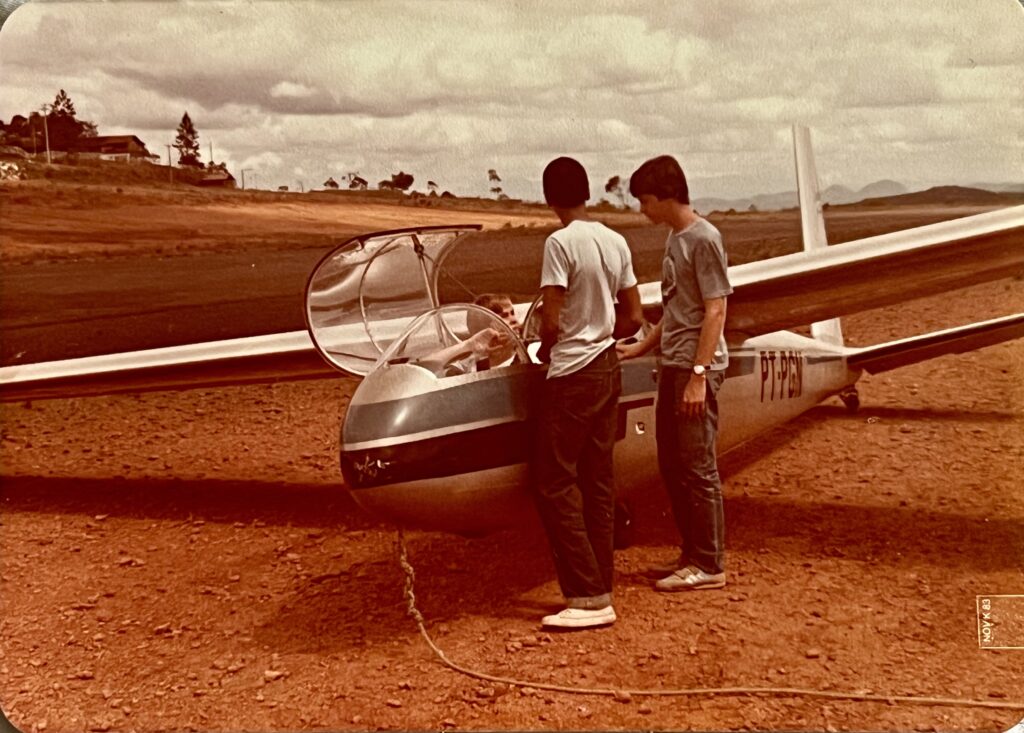
Brazilian gliders also form part of the country’s flying history, such as the KW-1 Quero Quero, a single-seat glider.
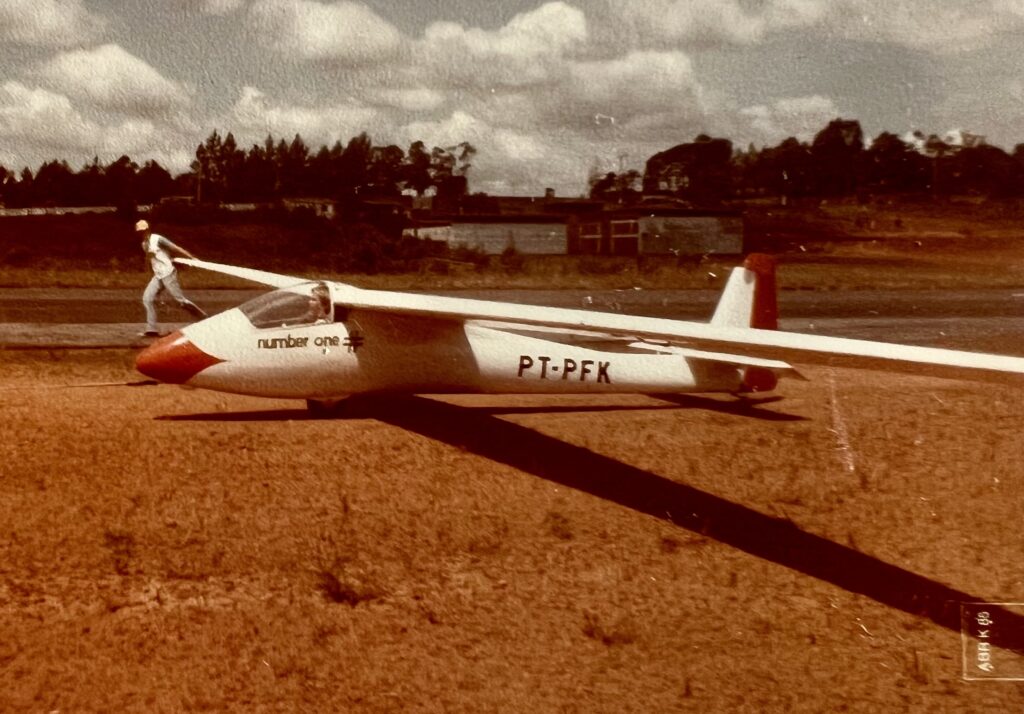
His interest in aviation extended beyond gliding. He developed experience in powered aircraft and aerobatics, disciplines that demand precision, sound judgement, and a detailed understanding of how an aircraft responds to control inputs.
At 17, Halboth took his father for a flight in a Cessna 172. The moment reflected how deeply aviation had become part of his life: flying was no longer simply something he was learning to do, but something he could share with his family.

From Glider Pilot to Flight Instructor
At 19, Halboth began his first professional job as an airplane flight instructor.
His career later expanded into executive and commercial aviation, giving him experience well beyond the glider cockpit. Flying different aircraft in different operational environments added to the knowledge and discipline he would later bring to experimental aircraft and record attempts.
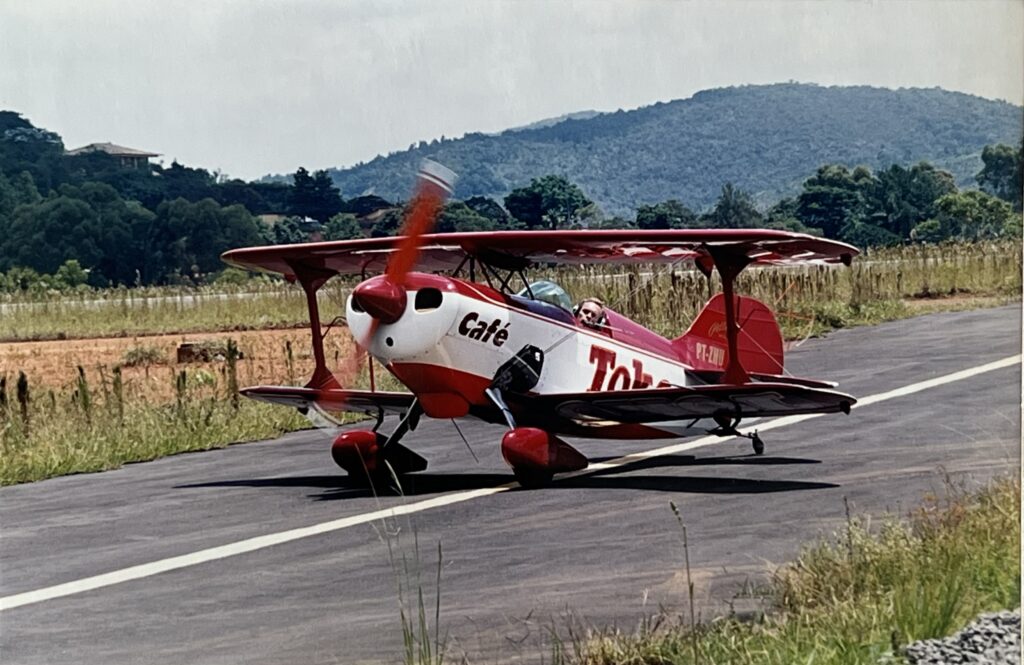
Alongside his professional flying, Halboth pursued aerobatics. The discipline requires accurate control, careful planning, and the ability to manage an aircraft through demanding manoeuvres. His competition record includes Brazilian Advanced aerobatic championships in 2000 and 2002, followed by the Brazilian Unlimited championship in 2005. In 1986, he also placed second in the Rali Alberto Bertelli.
He flew aircraft including the Pitts S-1S, a compact biplane widely associated with aerobatic flying.
His experience across gliding, powered flight, and aerobatics would become particularly valuable when he began working with aircraft designed to push the limits of speed.
CEA-308: Four World Records in 2010
One of the most important projects in Halboth’s record-breaking journey was the CEA-308, an experimental aircraft developed through the Centro de Estudos Aeronáuticos at the Federal University of Minas Gerais in Brazil.
The project brought together aircraft design, engineering education, testing, and performance development. Halboth became involved with the aircraft and worked with its designer, Paulo Iscold, as the team pursued speed records in a tightly defined aircraft weight category.
According to an interview published by AERO.IN, the CEA-308 project had experienced an engine-related setback. Halboth proposed continuing the test programme and suggested using a four-stroke engine. The team accepted the proposal, and the aircraft subsequently became the platform for his first four world records.
Powered by a Jabiru 2200 engine producing approximately 80 horsepower, the CEA-308 reached 360.13 km/h, approximately 224 mph, over a three-kilometre course.
On 1 and 2 December 2010, the aircraft and its team achieved four world records recognised by the Fédération Aéronautique Internationale (FAI). The FAI’s published announcement lists the following achievements:
| Record category | CEA-308 result |
|---|---|
| Speed over a 3 km course | 360.13 km/h |
| Speed over a 15 km course | 329.1 km/h |
| Speed over a 100 km closed circuit | 326.8 km/h |
| Time to climb to 3,000 metres | 8 minutes 15 seconds |
The records were achieved at Juiz de Fora Airport in Brazil. For Halboth, they marked a major milestone: his first four world records, and a foundation for the collaboration with Iscold that continued with Anequim.
The achievement also demonstrated how an experimental aircraft project, supported by careful testing and a capable pilot, could compete at an international level.
The Idea Behind Anequim
After the CEA-308 project, Halboth and Iscold continued working together. According to AOPA, they had been collaborating since 2009, and the experience gained from the earlier aircraft helped shape their next ambitious project.
The result was the CEA-311 Anequim, a sleek experimental aircraft developed specifically to pursue higher speeds. The project involved university students and engineers working on aerodynamic design, construction, systems, and flight testing.
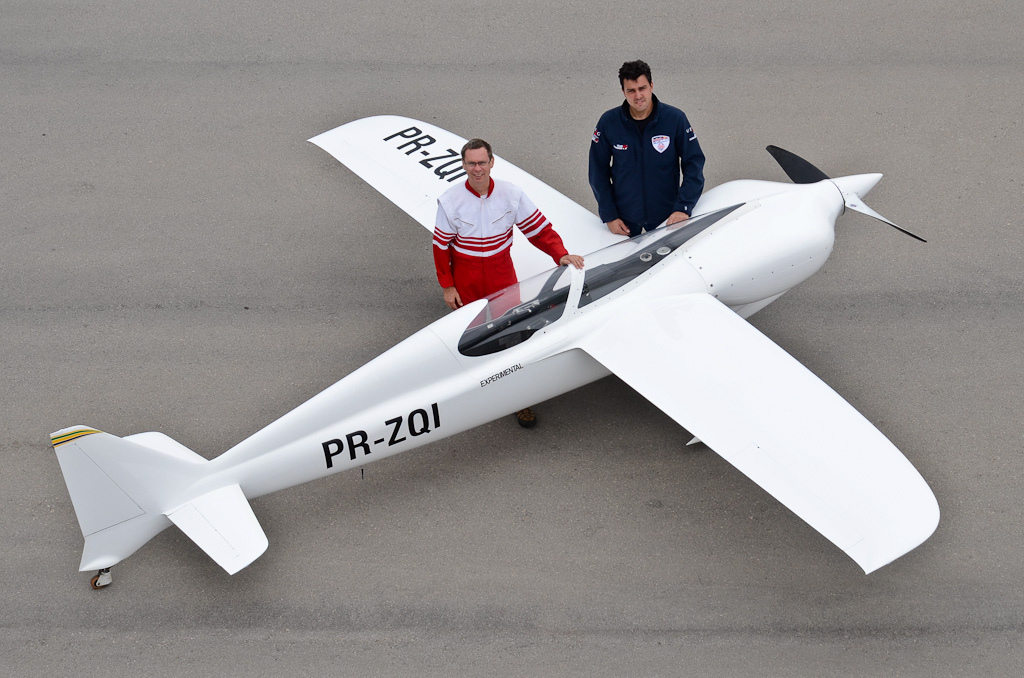
Anequim was designed and built with Halboth’s active participation. The aircraft was also tailored to suit his physical dimensions, an important consideration in a cockpit where space and aerodynamic efficiency were closely linked.
As quoted by AOPA, Halboth described how tight the cockpit was. Getting into position required him to manoeuvre his legs and body carefully, adjust his parachute, and secure the harness. The design left little room for unnecessary movement, with the controls arranged to fit the compact cockpit.
This was more than a conventional aircraft project. Every design choice had to serve the objective of reducing drag and improving performance while still allowing the pilot to control the aircraft safely.
The team’s challenge was formidable. In its weight category, the existing speed record had been set by Jon Sharp’s Nemesis, an aircraft renowned for its performance. Anequim was developed to challenge that benchmark.
The First Flight: A Promising Aircraft and an Unexpected Problem
Anequim’s maiden flight took place in November 2014 at Brigadeiro Cabral Airport in Divinópolis, Brazil.
According to AOPA, Halboth described the aircraft’s handling as highly predictable. However, the first flight also brought an unexpected technical problem.
A flap actuator failure prevented the flaps from extending. Without the flaps, the aircraft needed a higher approach speed than planned, making the landing more challenging.
AOPA reported that Halboth made multiple approaches because the aircraft was difficult to slow down. He eventually used a sideslip to manage the approach and continued the manoeuvre into the flare. After touchdown, the aircraft floated along the runway, and he shut down the engine before bringing it to a stop.
The landing was completed safely, and the flap problem was subsequently fixed. The incident illustrated the realities of testing a new aircraft: even when a design performs well, early flights can reveal problems that must be addressed before the next stage of development.
For Halboth and the Anequim team, the maiden flight was an important step towards the record attempts that followed.
Five World Records at Santa Cruz
In August 2015, Anequim took to the skies at Santa Cruz Air Force Base in Rio de Janeiro for a series of world record attempts.
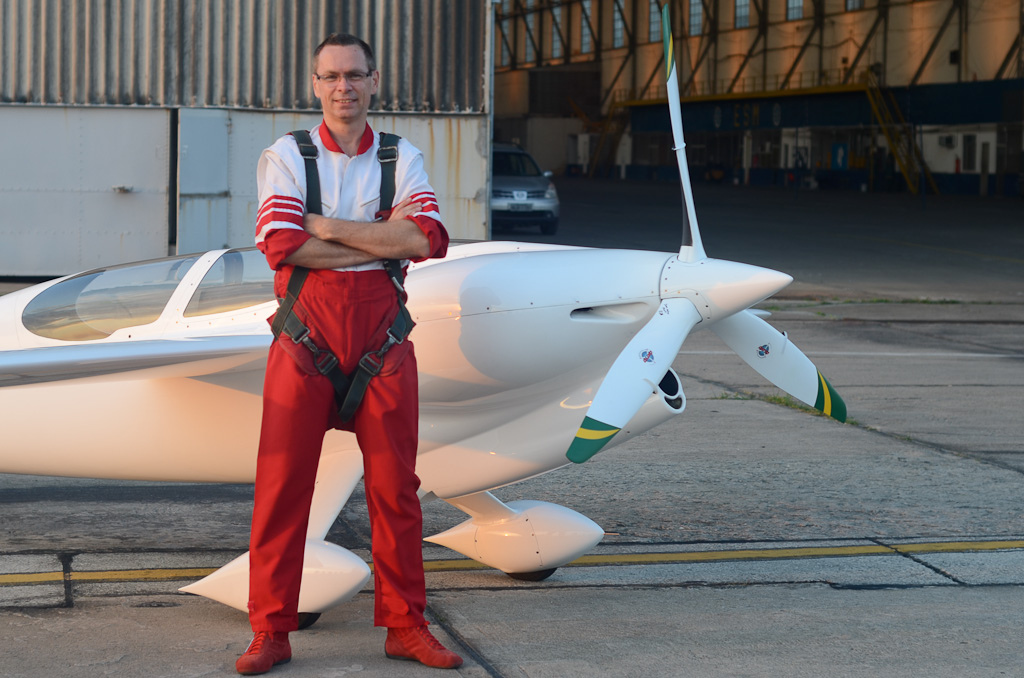
The aircraft was powered by a Sky Dynamics AEIO-360 engine, inspired by the Lycoming design, producing 240 horsepower on the dynamometer. Combined with Anequim’s aerodynamic design and Halboth’s experience, the powerplant contributed to the aircraft’s exceptional performance during the world record attempts.
The team set five records across speed courses and a climb to altitude. According to FAI records and FLYER, the results were:
| Record category | Anequim result | Approximate speed in mph |
|---|---|---|
| Speed over a 3 km course | 521.08 km/h | 323.78 mph |
| Speed over a 15 km course | 511.19 km/h | 317.64 mph |
| Speed over a 100 km closed circuit | 490.14 km/h | 304.56 mph |
| Speed over a 500 km closed circuit | 493.74 km/h | 306.80 mph |
| Time to climb to 3,000 metres | 2 minutes 26 seconds | Not applicable |
The three-kilometre speed of 521.08 km/h, or approximately 323.78 mph, became one of the standout figures from the project. The team also achieved a climb to 3,000 metres in 2 minutes and 26 seconds, improving on the previous 3-minute-and-8-second record by 42 seconds.
According to FLYER, the aircraft’s climb performance was striking during the record attempt. It rotated in less than seven seconds, pitched up to around 30 degrees, and reached a climb rate of approximately 4,000 feet per minute at 6,000 feet.
These figures show how the aircraft was developed around a specific goal. Anequim was not simply fast in ordinary flight; it was an engineering project designed to perform exceptionally well under defined record conditions.
The five Anequim records followed the four achieved with the CEA-308 in 2010. Together, the projects account for the nine world records associated with Halboth’s record-breaking career.
The Work Behind the Records
World records can look simple when presented as a list of numbers. In reality, each one depends on the work of many people and the coordination of several demanding tasks.
The pilot must understand the aircraft’s behaviour and operate it precisely. The engineering team must design and build an aircraft capable of achieving the required performance. Testing must identify weaknesses, and the team must refine the aircraft and its systems before attempting the records.
Anequim demonstrates this partnership clearly. Iscold’s design work, the involvement of students and engineers, and Halboth’s experience as a pilot all contributed to the project. The aircraft’s close fit around its pilot was one example of how the design considered the person who would fly it, not just the machine’s performance figures.
The record attempts also depended on choosing an appropriate location and preparing for the specific requirements of each flight. At Santa Cruz Air Force Base, the team had the operating environment needed for the programme.
The result was a project in which engineering and piloting worked together towards a shared objective.
A Career Beyond the Cockpit of a Record Aircraft
According to his published biography, Halboth flew for Varig, EVA Air, Shenzhen Airlines, and Ryanair; FLYER reports that at Ryanair he was a Boeing 737 captain.
A 2015 profile in FLYER also reported that he was flying helicopters for a corporate client at the time. An interview with AERO.IN described his experience with the Agusta 109 helicopter.
His experience across gliding, aerobatics, flight instruction, executive aviation, and commercial airline operations formed a varied background for the demanding work of experimental aircraft testing and record attempts.
Read more stories about the people behind the sport in our pilot stories collection, featuring pilots whose experiences, achievements, and passion for aviation have helped shape the gliding community.
From First Solo to Nine World Records
Gúnar Armin Halboth’s journey began with glider flying as a teenager and developed into a career spanning several areas of aviation. His four CEA-308 records in 2010 were followed by five more with Anequim in 2015.
The numbers are remarkable, but the wider story is about more than speed. It is about years of flying experience, collaboration with engineers, the challenges of developing experimental aircraft, and the discipline required to turn a design into a record-setting machine.
His achievements show what can happen when a skilled pilot and a dedicated engineering team work towards the same ambitious goal.
Watch More Aerobatic Flights
Explore more aerobatic footage featuring Gúnar Armin Halboth:
- Flying the K-55: The Super-Aerobatic Younger Brother of the T-27 Tucano!
- Triple loop inside
- Gúnar 4 loops Glider from outside
- Gunar Departure slo mo & inverted loop DR-107
Sources and Further Reading
- FAI: Brazilian Students and Their Professor Build World Record Breaking Aircraft
- AOPA: Flying Shark Eats Records
- FLYER: Anequim Project
- Air & Space Magazine: The Next World Speed Record
- Air & Space Magazine: Brazilian Team Claims World Racing Records
- AERO.IN: Interview with Gúnar Armin Halboth
- Gúnar Armin Halboth on Portuguese Wikipedia