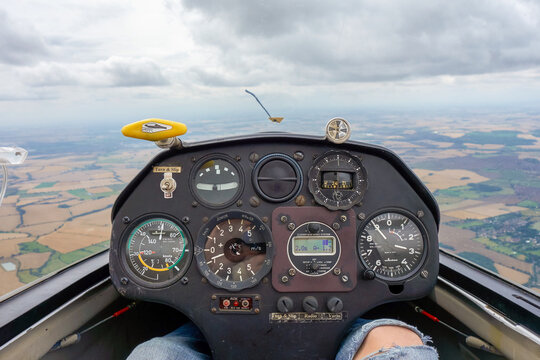

Imagine flying a glider on a sunny day. You find a column of rising air, turn into it, and start gaining height. But how do you know whether the air is lifting you or your glider is simply changing speed?
How does a variometer work in a glider? This is where a variometer becomes one of the most useful instruments in a glider cockpit.
A variometer helps a pilot understand how quickly the glider is climbing or descending. A properly configured total energy variometer goes further by compensating for changes in airspeed, helping the pilot recognise changes in the energy available from the surrounding air.
In this guide, you will learn how a variometer works, the main types used in gliding, what its beeps mean, and how pilots use it to find thermals.
What Is a Variometer in a Glider?
A variometer, often called a vario, is an instrument that indicates the rate at which a glider is gaining or losing height. Depending on its design and operating mode, it can also indicate changes in total energy or estimate the vertical movement of the surrounding air.
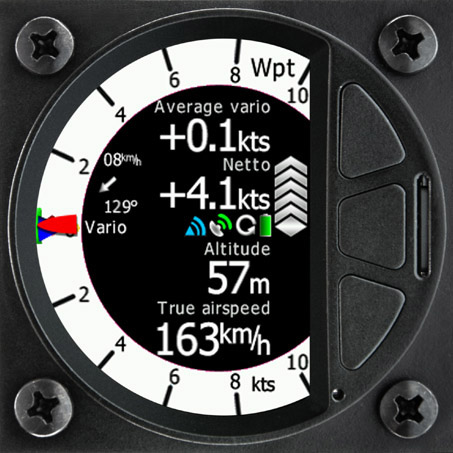
It is different from an altimeter. An altimeter shows how high the glider is, while a variometer shows how quickly its altitude or energy state is changing.
For example:
- +2 m/s: A positive indication of two metres per second.
- 0 m/s: No indicated rate of change in the selected mode.
- −1 m/s: A negative indication of one metre per second.
Many instruments in the United States use feet per minute (ft/min), while many European gliding instruments use metres per second (m/s).
The exact meaning of the reading depends on the instrument. An uncompensated variometer, a total energy variometer, and a netto variometer do not all measure or display the same thing. If you are new to gliding, start with our beginner’s guide to gliding basics to understand the fundamental principles of this sport.
How Does a Variometer Work?
To understand a traditional variometer, start with a simple scientific fact: air pressure decreases as altitude increases.
A conventional pneumatic variometer uses changes in air pressure to detect vertical movement.
Inside a typical pneumatic instrument, a reference chamber is connected to the outside static-air pressure source through a restricted opening. When the outside pressure changes, the pressure inside the chamber takes a little time to catch up.
The instrument measures the pressure difference and converts it into an indication of climb or descent.
What Happens When a Glider Climbs?
As the glider climbs, the surrounding air pressure decreases.
The pressure inside the reference chamber temporarily remains higher than the outside static pressure. Air flows through the restricted connection as the pressures move towards equilibrium.
The instrument detects this pressure difference and indicates a climb.
What Happens When a Glider Descends?
As the glider descends, the surrounding air pressure increases.
The pressure difference changes direction, and the variometer indicates a descent.
The faster the pressure changes, the greater the indicated rate of climb or descent.
Electronic variometers use pressure sensors and electronic processing to measure these changes. The exact design depends on the instrument.
Why Is a Variometer So Important in a Glider?
A glider gradually loses energy as it moves through the air. To remain airborne for a long time, the pilot needs to find air that provides enough lift to offset the glider’s natural energy loss.
Three common sources of rising air are:
- Thermals: Columns of rising air, often caused by the Sun heating the ground unevenly.
- Ridge lift: Air pushed upward when wind flows against a hill or mountain ridge.
- Mountain wave lift: Rising air associated with waves that form when stable air flows over mountains in suitable conditions.
The variometer helps pilots detect changes in climb or sink rate as they encounter these conditions.
When a pilot finds a thermal, the instrument can help identify stronger lift. The pilot can then adjust the turn to remain within the rising air.
Without a variometer, pilots must rely more heavily on visual clues, experience, and other flight information to judge the air around them.
What Are the Main Types of Glider Variometers?
Variometers can be classified in different ways. Some terms describe how the instrument senses pressure or processes data. Others describe the information it presents to the pilot.
The following sections explain five important measurement and compensation types or functions found in gliding.
1. Uncompensated Variometer
An uncompensated variometer indicates the glider’s actual rate of climb or descent without correcting for changes in airspeed.
This is useful information, but it has an important limitation.
Imagine pulling back on the control stick. The glider may briefly climb while slowing down. A basic variometer can indicate a climb even though the glider has not gained energy from the surrounding air.
The reverse can happen when the pilot lowers the nose. The glider may accelerate while losing height, producing a sink indication that does not tell the whole energy story.
This is why gliders often use total energy compensation.
2. Total Energy Variometer
A total energy variometer, often called a TE vario, compensates for changes in airspeed so the pilot can better judge whether the glider is gaining or losing energy.
A glider has two main forms of mechanical energy:
- Potential energy: Energy associated with height.
- Kinetic energy: Energy associated with speed.
When a glider trades height for speed, or speed for height, these two forms of energy change. In an idealised exchange without drag or external energy input, their sum remains constant.
A total energy system reduces the misleading indication caused by this exchange.
For example, if the pilot pulls back and the glider briefly rises while slowing down, a correctly functioning TE variometer reduces the false climb indication caused by that manoeuvre.
If rising air adds energy to the glider, the TE vario can indicate that gain.
This makes total energy compensation especially useful for thermal and cross-country soaring.
3. Pneumatic Total Energy Variometer
A pneumatic TE variometer uses air pressure and a suitable total energy probe or pressure arrangement to compensate for airspeed changes.
The probe is installed in an appropriate area of airflow and connected to the instrument’s pressure system. The pressure signal helps offset the indication caused by exchanging speed and height.
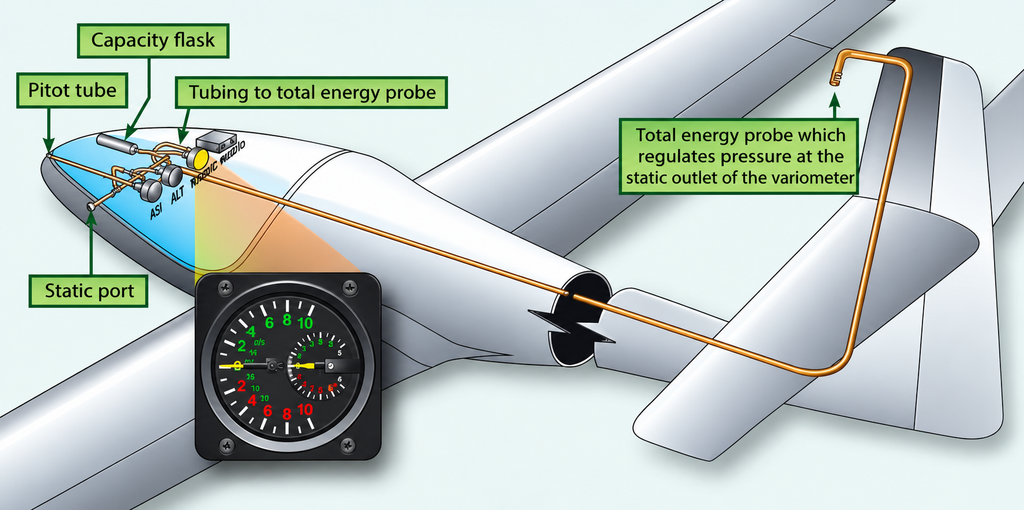
The result is a more useful indication of changes in the glider’s total energy.
The quality of the installation and the position of the probe matter. A poorly positioned, damaged, or incorrectly connected probe can cause inaccurate compensation.
4. Electronic Total Energy Variometer
An electronic TE variometer uses pressure sensors and electronic processing to compensate for changes in airspeed.
Depending on the design, the system may use airspeed and altitude-related data to estimate the effect of changes in kinetic energy and correct the displayed indication.
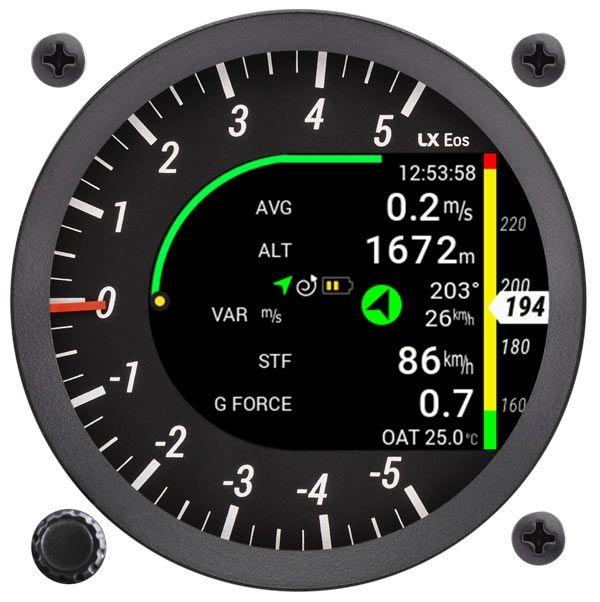
Some modern flight computers offer electronic total energy compensation as a configurable feature. The installation and settings must match the instrument manufacturer’s instructions.
Pneumatic and electronic compensation are different ways to achieve a similar goal. They describe how compensation is implemented, rather than necessarily representing different kinds of display. Pilots can consult the LXNAV gliding instrument manuals to learn more about available functions and setup options.
5. Netto Variometer
A netto variometer is designed to estimate the vertical movement of the surrounding air rather than simply showing the glider’s own climb or sink rate.
A glider naturally sinks through still air because it loses energy to drag. A netto system accounts for the expected sink of the glider at the relevant airspeed, allowing the pilot to better judge whether the surrounding air is rising or descending.
For example, a glider may still be losing altitude while flying through rising air. A netto indication can show that the air is rising even though the glider itself is descending.
This is useful when evaluating weak lift, comparing air conditions, and deciding whether an area is worth exploring.
Netto readings are estimates. Their accuracy depends on factors such as the glider’s polar, airspeed, loading, instrument configuration, and calibration.
Audio Variometer: How Do the Beeps Work?
Audio output is a feature of a variometer, not a separate method of measuring vertical movement. Many electronic varios provide both visual indications and sound cues.
Audio signals help pilots notice changes in lift without constantly looking down at the instrument panel.
The exact sound pattern depends on the instrument and its settings, but a common arrangement works like this:
- Faster or higher-pitched beeps: Often indicate stronger positive lift.
- Slower or lower-pitched beeps: May indicate weaker lift.
- A distinctive sink tone: May indicate a negative reading.
- Silence: May represent near-zero lift or a neutral reading, depending on the settings.
Some instruments use different sound patterns, so pilots should learn the specific system installed in their aircraft.
How Pilots Use the Sound
Imagine that a pilot is searching for a thermal.
The vario begins to beep as the glider enters rising air. The beeps become faster as the indicated lift increases. The pilot uses this information, along with aircraft handling and visual clues, to decide whether to turn and centre the thermal.
As the glider circles, changes in the sound can help the pilot judge whether the lift is getting stronger or weaker.
The pilot should not turn based on sound alone. Safe flying requires coordinated control inputs, airspeed awareness, lookout, and an understanding of the aircraft’s limitations.
What Is the Difference Between a Vario and a Vertical Speed Indicator?
A variometer and a vertical speed indicator (VSI) are related instruments. Both can indicate a rate of climb or descent using changes in air pressure.
The main difference is their purpose and how they may be configured.
A conventional VSI shows the aircraft’s rate of vertical movement. A glider’s total energy variometer is designed to help the pilot understand changes in energy while reducing misleading indications caused by airspeed changes.
| Feature | Conventional VSI | Glider TE Variometer |
|---|---|---|
| Main indication | Rate of climb or descent | Change in total energy, expressed as an equivalent vertical rate |
| Uses pressure information | Usually | Yes, directly or through a sensor system |
| Compensates for airspeed changes | Not normally | Yes, when correctly configured |
| Common gliding use | General vertical-speed information | Finding and evaluating lift |
A variometer does not replace the altimeter, airspeed indicator, or other required flight instruments. Each instrument provides different information.
How Does a Variometer Help Pilots Find Thermals?
A thermal is a region of rising air. When a glider flies into one, its energy may increase, allowing it to climb or reduce its rate of descent.
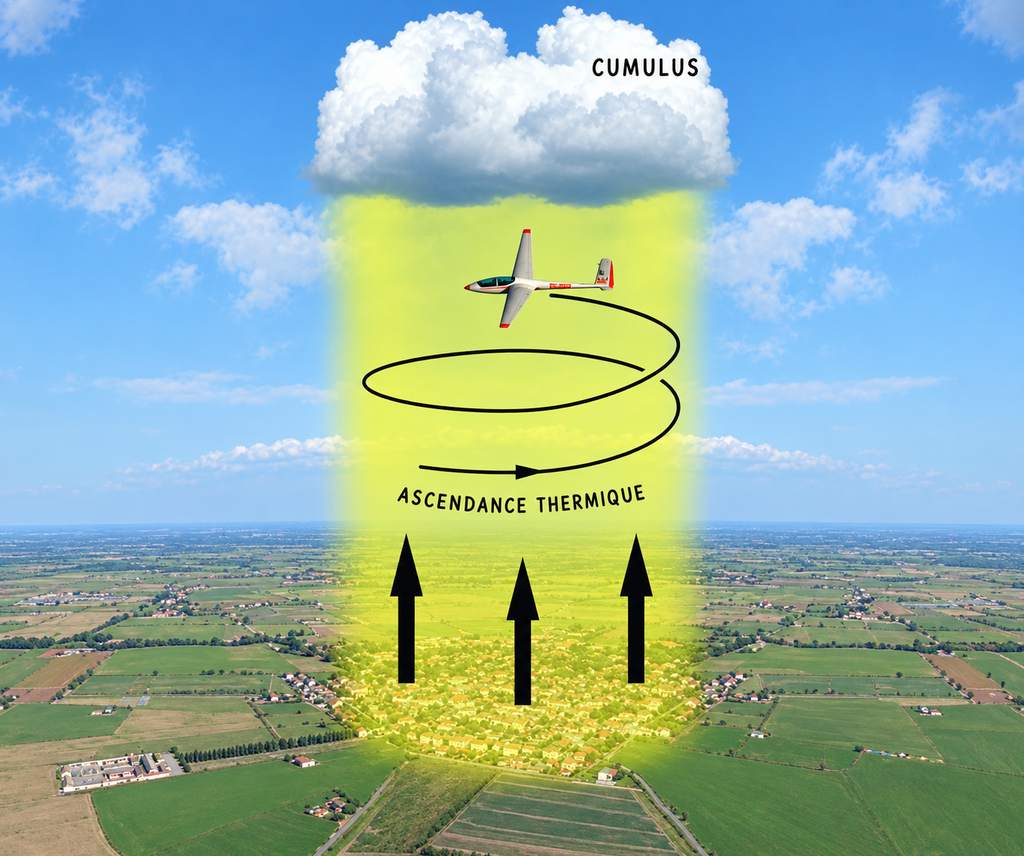
The variometer helps the pilot notice that change.
A simplified example:
- The glider is descending slowly in ordinary air.
- The variometer begins to indicate less sink.
- The indication changes to positive lift.
- The pilot assesses the conditions and decides whether to turn.
- The pilot adjusts the turn to remain in the strongest useful part of the thermal.
Real thermals are not perfectly smooth or circular. Lift can vary across the thermal, and the best response depends on the conditions and the pilot’s skill.
The variometer is an important aid, but it does not find thermals automatically or guarantee that a thermal will be strong enough to sustain the glider.
Why Can a Variometer Show a Climb When the Glider Is Not in a Thermal?
This is a common question.
An uncompensated variometer can show a climb when the pilot changes the glider’s pitch and exchanges speed for height. Pilots sometimes refer to this misleading indication as a “stick thermal.”
The glider may rise briefly, but the increase in height comes at the expense of airspeed. It does not necessarily mean that the surrounding air has supplied new energy.
A total energy variometer reduces this effect by compensating for the speed change.
However, total energy compensation is not perfect in every situation. Poor setup, turbulence, abrupt manoeuvres, or instrument errors can still affect the indication.
Pilots should therefore interpret the variometer alongside airspeed, attitude, visual conditions, and their training.
What Units Does a Glider Variometer Use?
Variometers commonly display vertical rate in metres per second (m/s) or feet per minute (ft/min). Some systems may offer other units.
Examples:
- +1 m/s: Positive indication at one metre per second.
- −2 m/s: Negative indication at two metres per second.
- +200 ft/min: Positive indication at 200 feet per minute.
A positive sign usually indicates climb or increasing total energy. A negative sign usually indicates sink or decreasing total energy.
Always check the instrument’s selected mode and units. A netto display, a total energy display, and an uncompensated display do not necessarily represent exactly the same quantity.
Can You Fly a Glider Without a Variometer?
A glider can physically fly without a variometer, but the instrument provides valuable information for soaring.
Without it, the pilot must rely more on visual signs, experience, and other flight information to judge lift and sink.
A variometer can make it easier to identify weak lift, centre a thermal, and evaluate changing air conditions. It is especially helpful for cross-country flying, where finding rising air can determine whether a flight continues.
The equipment required for a particular flight depends on the aircraft, operating rules, and applicable regulations. Pilots should follow their instructor’s guidance and the aircraft’s approved documentation.
Frequently Asked Questions About Glider Variometers
Final Thoughts
A variometer is one of the most useful instruments in a glider because it helps pilots understand changes in climb, sink, and lift.
An uncompensated variometer indicates the glider’s vertical movement. A total energy variometer compensates for changes in airspeed, helping pilots distinguish an exchange of speed and height from a gain or loss of energy. A netto variometer estimates the movement of the surrounding air.
Audio output makes these indications easier to notice without looking constantly at the instrument panel.
Understanding the variometer is an important step toward understanding thermals, ridge lift, and efficient soaring.
Always interpret variometer indications alongside airspeed, aircraft attitude, visual conditions, and proper flight training.