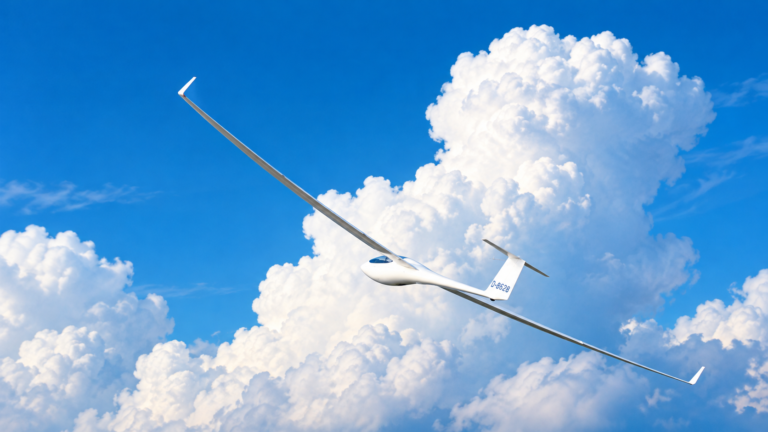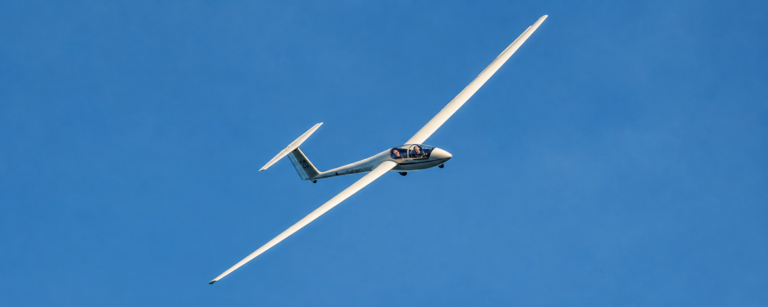

Imagine flying a glider thousands of feet above a mountain range. The air around you feels remarkably smooth, your variometer shows a steady climb, and there may be no obvious thermal beneath your wings. Yet your glider continues to gain altitude without an engine.
How is this possible?
What is wave soaring? Wave soaring is a gliding technique in which pilots use rising air within atmospheric waves to gain altitude and remain airborne for extended periods. These waves often form when strong winds flow across a mountain range and disturb a stable layer of air above it. The resulting pattern of rising and sinking air can extend far downwind of the mountains and reach considerable heights.
Mountain waves have helped glider pilots achieve exceptional altitudes and long distance flights. However, the same weather system can also produce powerful downdrafts and dangerous turbulence.
Understanding how wave soaring works helps explain one of the most remarkable ways a glider can use the atmosphere to fly.
How Does Wave Soaring Work?
To understand how wave soaring works, it helps to imagine what happens when moving air encounters a mountain range.
When wind blows across a mountain, the terrain forces the air to move upward. If the atmosphere is sufficiently stable, the displaced air tends to return toward its original level. Its movement can continue as a series of vertical oscillations downstream of the mountain.
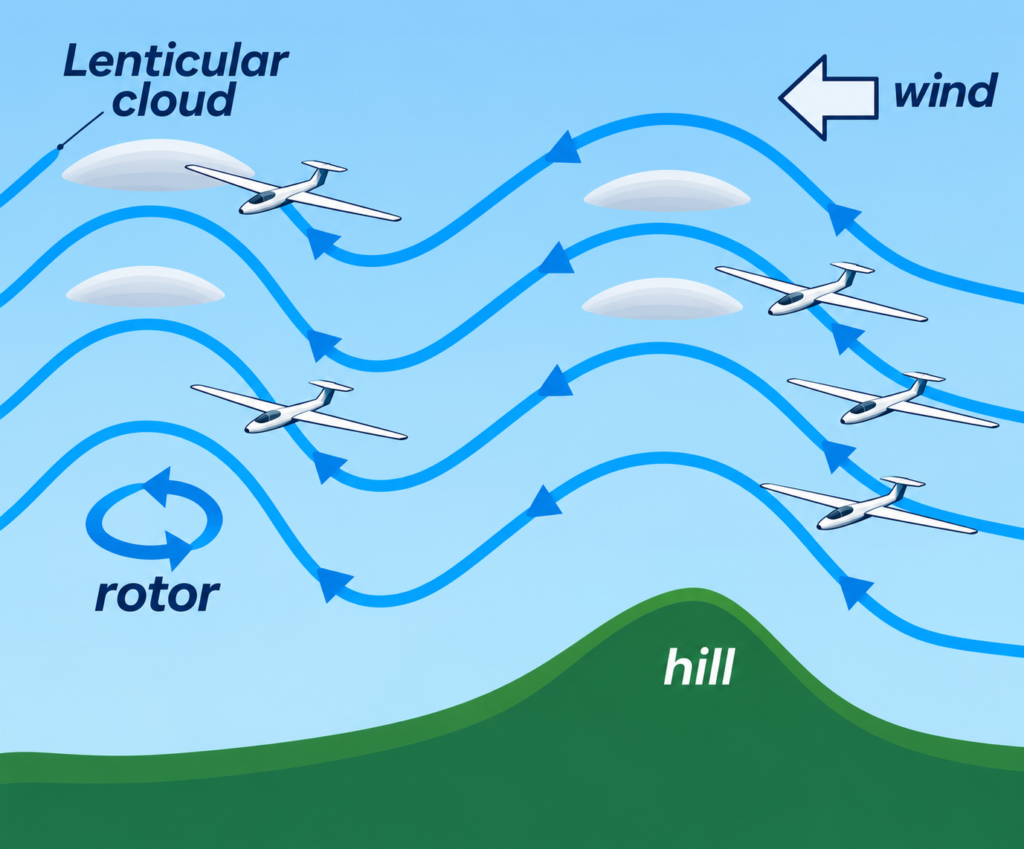
These oscillations are known as mountain waves, also called lee waves.
Some parts of the wave contain rising air, while other parts contain sinking air. A glider pilot who finds a suitable region of rising air can use it to gain altitude.
The mountain itself does not need to be directly underneath the glider. In favorable conditions, wave lift can extend a considerable distance downwind.
How Mountain Waves Form
Mountain waves generally develop through the following process.
1. Wind flows across a mountain range
The wind needs a suitable speed and direction to pass over the terrain and create an organized disturbance in the atmosphere. Wind that crosses the ridge at a favorable angle is generally more effective than wind flowing mainly along it.
2. The mountain forces air upward
As the airflow encounters the rising terrain, it is displaced vertically. The air then moves over the ridge and descends on the opposite side.
3. Atmospheric stability helps the air oscillate
In a stable atmosphere, displaced air tends to return toward its equilibrium level. Instead of simply settling into a new position, it can move above and below that level in a repeating pattern.
4. Waves develop downwind
Under favorable conditions, the oscillations form a series of wave crests and troughs downwind of the mountain range. The pattern may extend over several mountain ranges and reach high altitudes.
5. A glider uses the rising part of the wave
When a pilot finds a region of suitable upward airflow, the glider can climb even though it has no engine. The pilot must remain aware of the surrounding downdrafts, turbulence, terrain, airspace and changing weather.
Mountain waves, also called lee waves, are a type of atmospheric gravity wave. They form when airflow over terrain displaces air vertically in a stably stratified atmosphere. Buoyancy provides the restoring force that allows the displaced air to oscillate.
The Federal Aviation Administration’s Glider Flying Handbook explains the atmospheric conditions and airflow patterns associated with wave soaring.
What Conditions Create Mountain Waves?
Mountain waves do not form whenever wind blows over a mountain. The atmosphere, wind profile and terrain must work together in a suitable way.
| Condition | Why it matters |
|---|---|
| Suitable wind speed | Wind must have enough strength to create a meaningful disturbance over the terrain. |
| Favorable wind direction | Wind generally needs to cross the ridge at a suitable angle. |
| Atmospheric stability | Stable air supports the vertical oscillations that produce mountain waves. |
| Suitable terrain | The height, width, shape and arrangement of the mountains influence the wave pattern. |
| Favorable wind profile | Changes in wind speed and direction with altitude can affect the wave’s strength and vertical extent. |
| Suitable moisture conditions | Moisture can make the waves visible through cloud formation, although clouds are not essential. |
Wind speed often increases with altitude in favorable mountain wave conditions. This vertical wind shear can help the wave extend upward, while changes in wind direction with height can also influence its structure. Wind generally needs to cross the ridge at a suitable angle, but the exact requirements depend on the terrain and the atmospheric profile.
There is no single wind speed, mountain height or wind angle that guarantees usable wave lift. Pilots assess the complete weather situation rather than relying on one measurement.
Why Does Atmospheric Stability Matter?
Atmospheric stability is one of the key factors in mountain wave formation.
When air in a stable atmosphere is pushed upward, it tends to return toward its original level. If the surrounding conditions support continued oscillation, this movement can create a wave pattern that extends downwind.
In a less stable atmosphere, vertical air movement may be affected by convection and mixing. This can change the structure of the airflow and make an organized mountain wave less likely under some conditions.
A temperature inversion near mountaintop level can provide a particularly favorable stable layer for mountain wave formation. However, an inversion is not essential in every case. The overall stability profile, together with the wind and terrain, determines whether a useful wave develops.
For pilots, atmospheric stability is not simply a matter of whether the air feels smooth. It is a property of the atmosphere that helps determine how displaced air behaves.
How Do Gliders Gain Altitude in a Mountain Wave?
A glider gains altitude when the surrounding air rises faster than the glider descends through it.
Even a high-performance sailplane gradually loses height when flying through air that is not rising. Its wings generate lift, but the aircraft still experiences drag. In still air, the glider must descend to maintain forward flight.
Wave lift changes the situation.
If the air rises faster than the glider’s natural sink rate under its current flight conditions, the aircraft can climb relative to the ground.
A useful simplified relationship is:
Glider climb rate ≈ vertical air speed − glider sink rate
Both values must use compatible vertical-speed references and sign conventions. The glider’s sink rate also varies with its airspeed, configuration and other flight conditions.
For example, imagine a glider descending through the surrounding air at 2 feet per second while the air itself rises at 8 feet per second. Under those simplified conditions, the glider would gain approximately 6 feet per second relative to the ground.
The example illustrates the principle rather than predicting the climb rate of a particular sailplane.
Unlike thermal soaring, where pilots often circle within a relatively localized column of rising air, mountain wave soaring may allow pilots to climb in a more extensive region of organized airflow.
Pilots use instruments such as a variometer to monitor vertical movement. However, an instrument reading is only one part of the picture. Pilots must also evaluate the weather, their position within the wave system, and the possibility of strong downdrafts nearby.
What Are Lenticular Clouds?
One of the most recognizable signs of mountain wave activity is the lenticular cloud.
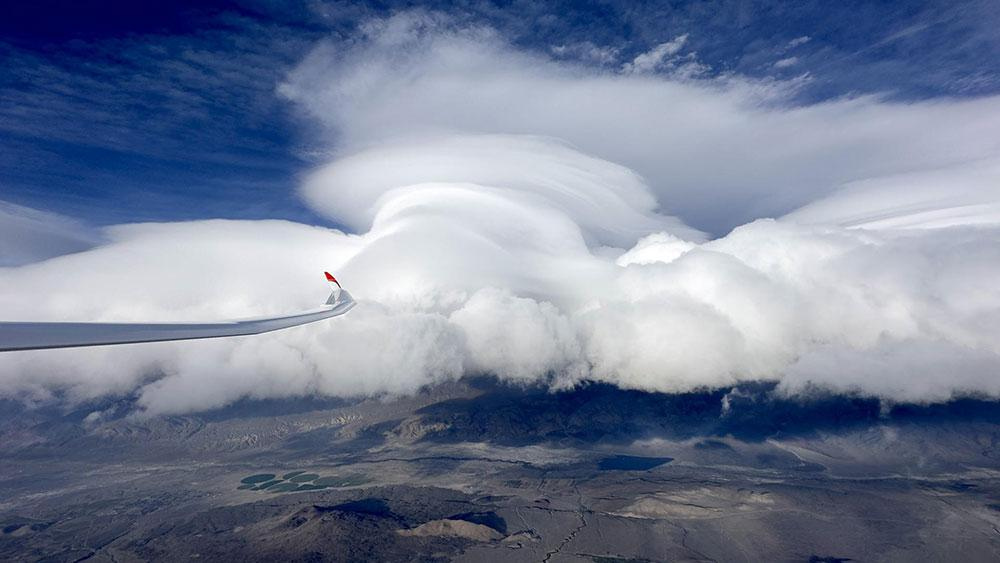
Lenticular clouds are smooth, lens-shaped clouds that often form in the crests of atmospheric waves. Their appearance can resemble a stack of plates or a flying saucer, making them particularly striking in photographs.
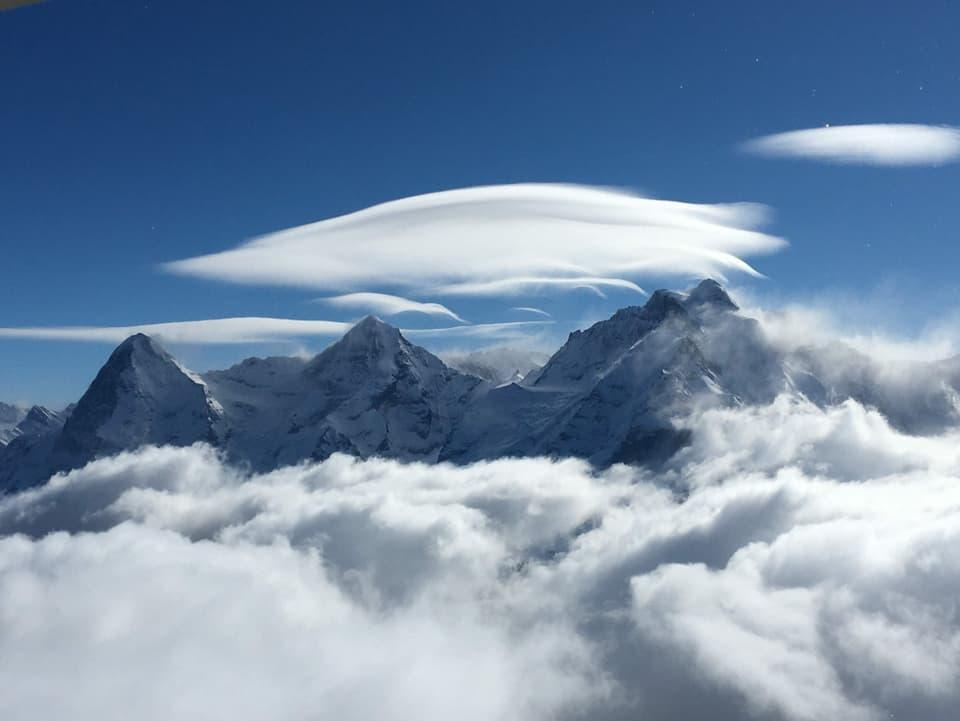
They form when moist air rises within a wave and cools enough for water vapor to condense. As the air moves into a region where it descends and warms, the cloud may evaporate.
Although the airflow continues moving through the wave, a lenticular cloud can appear almost stationary relative to the ground. This happens because the cloud forms and dissipates in different parts of the moving air.
What Do Lenticular Clouds Tell Glider Pilots?
Lenticular clouds can help pilots recognize possible mountain wave activity. Their shape and position may reveal the presence of organized airflow, especially when they appear in repeated bands downwind of a mountain range.
However, a lenticular cloud does not automatically mean that safe or usable lift is available at the pilot’s current position. The location of the rising air, the strength of the wave, the wind profile and the surrounding hazards all matter.
Clouds also do not always reveal the complete structure of a wave system. Some wave activity occurs without visible clouds, while clouds may form at one altitude but not another.
The National Weather Service’s overview of mountain waves explains how stable airflow over terrain can produce mountain waves and how moisture can make the rising parts of those waves visible as clouds.
What Is Rotor Turbulence?
Mountain waves can produce smooth rising air at altitude while creating turbulent airflow closer to the mountains.
This turbulent region is commonly associated with rotor circulation, which develops beneath parts of the wave system. Rotor turbulence can be strong, irregular and difficult to predict.
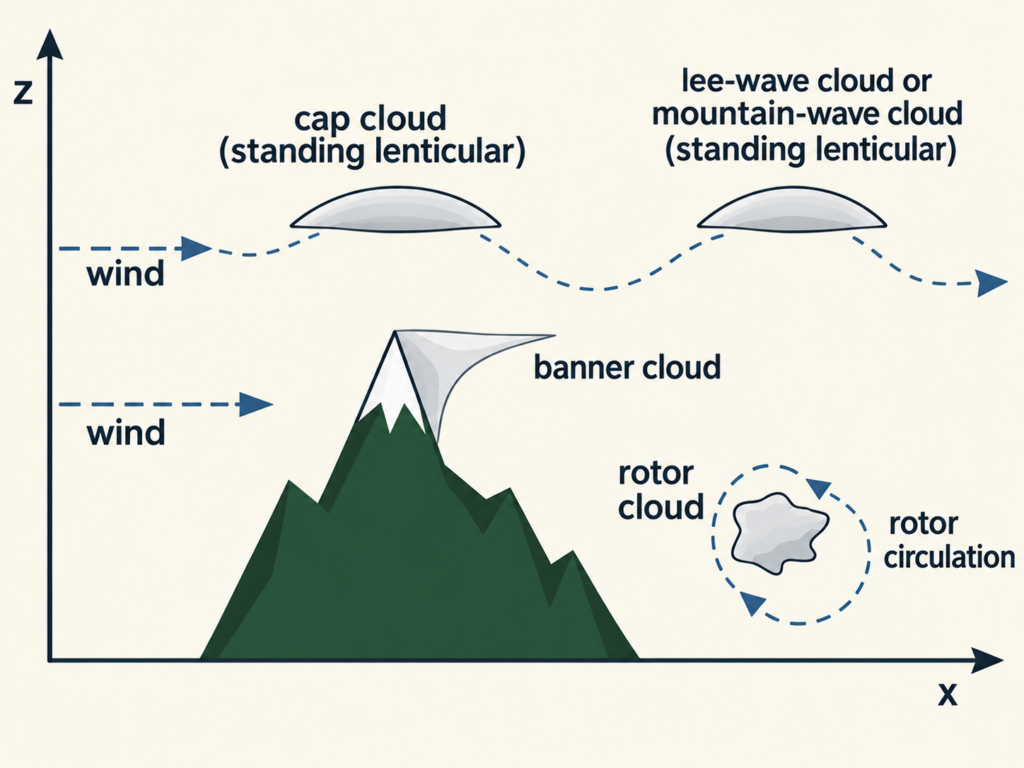
The airflow may contain rotating eddies, abrupt changes in vertical movement and significant variations in wind speed over short distances.
Why Is Rotor Turbulence Dangerous?
Rotor turbulence can expose a glider to sudden changes in airflow and aircraft loading. Depending on the conditions, it can range from moderate roughness to severe turbulence.
A rotor cloud may form in the turbulent region when moisture and temperature conditions are suitable. It often looks like a long, ragged roll of cloud beneath a smoother lenticular cloud.
However, rotor turbulence can exist without a visible rotor cloud. The absence of cloud does not mean the air is safe.
Wave systems can also contain strong downdrafts. In some situations, the descending air may exceed the glider’s ability to maintain or regain altitude. This makes it essential for pilots to understand the weather and maintain a safe margin from terrain and other hazards.
The FAA’s Glider Flying Handbook discusses rotor turbulence and the hazards associated with mountain wave systems.
Important: Wave soaring requires appropriate training, local knowledge, careful weather assessment and compliance with applicable flight rules. Lenticular clouds alone are not sufficient evidence that conditions are suitable for a flight.
Wave Soaring vs. Thermal Soaring vs. Ridge Soaring
Glider pilots use several forms of rising air to stay airborne. Wave soaring, thermal soaring and ridge soaring all use natural atmospheric movement, but they work in different ways.
| Feature | Wave soaring | Thermal soaring | Ridge soaring |
|---|---|---|---|
| Main source of lift | Atmospheric waves, often produced by wind crossing mountains | Rising columns of warm air | Wind deflected upward by terrain |
| Typical weather pattern | Suitable wind and a stable atmospheric profile | Surface heating and favorable convective conditions | Wind flowing toward and upward along a ridge |
| Common visual clues | Lenticular clouds may appear | Cumulus clouds may mark thermals | Ridge cloud or cap cloud may appear |
| Airflow pattern | Organized waves with alternating rising and sinking regions | More localized rising columns | Upward airflow near the windward side of a ridge |
| Potential altitude | Can reach very high altitudes in favorable conditions | Depends on thermal strength, cloud base and weather | Limited by terrain, airflow and weather conditions |
| Important hazards | Rotor turbulence, strong downdrafts, icing, cloud and airspace hazards | Sink between thermals, turbulence, overdevelopment and weather changes | Rotor or mechanical turbulence, downdrafts and terrain proximity |
These methods are not mutually exclusive. A glider pilot may encounter more than one type of lift during a flight, depending on the terrain and weather.
Can Mountain Waves Form Without Clouds?
Yes. Mountain waves can form in completely cloudless conditions.
Cloud formation depends on whether the air contains enough moisture and whether it cools sufficiently as it rises. If the air remains too dry for condensation, the wave may be invisible.
This creates an important distinction between the presence of a wave and the presence of a cloud.
A pilot may see prominent lenticular clouds when moisture is available at the right altitude. On another day, a similar wave pattern may develop without any obvious cloud markers.
The reverse also requires care: visible clouds do not reveal every detail of the airflow or guarantee that a particular part of the wave is suitable for soaring.
Pilots therefore use weather forecasts, wind and temperature profiles, local experience, and in-flight observations rather than relying on cloud appearance alone.
How Do Glider Pilots Find Mountain Wave Lift?
Finding usable wave lift involves interpreting the weather and understanding the local terrain.
Pilots planning a wave flight may consider:
- Wind forecasts: Wind speed and direction at different altitudes help indicate whether the airflow may be suitable.
- Atmospheric profiles: Temperature and wind profiles provide information about stability and wind shear.
- Terrain: The shape and orientation of the mountain range influence how the airflow may develop.
- Cloud patterns: Lenticular clouds may reveal wave crests, while rotor clouds can indicate turbulent airflow below.
- Local knowledge: Pilots familiar with a site may understand how its terrain and weather interact under different conditions.
- Airspace and flight planning: Planned altitudes, airspace restrictions, terrain clearance, oxygen requirements and the possibility of changing weather all need consideration.
Once airborne, pilots monitor their position and instruments to assess the airflow. A variometer can help indicate whether the glider is climbing or descending, but the reading must be interpreted alongside the broader flight situation.
A wave system is not necessarily uniform. One region may offer strong lift, while another may contain weak lift or a powerful downdraft. The conditions may also change over the course of a flight.
Wave soaring is therefore not simply a matter of locating a lenticular cloud and flying toward it. It requires a sound understanding of atmospheric conditions, navigation and risk management.
How High Can a Glider Fly Using Wave Lift?
Mountain wave lift can carry gliders to exceptionally high altitudes. Under favorable conditions, the wave system may extend well above the surrounding mountain peaks and into the upper atmosphere.
However, there is no single maximum altitude for wave soaring. The height a glider can reach depends on the wave structure, atmospheric conditions, aircraft performance, pilot decisions, applicable regulations and available safety equipment.
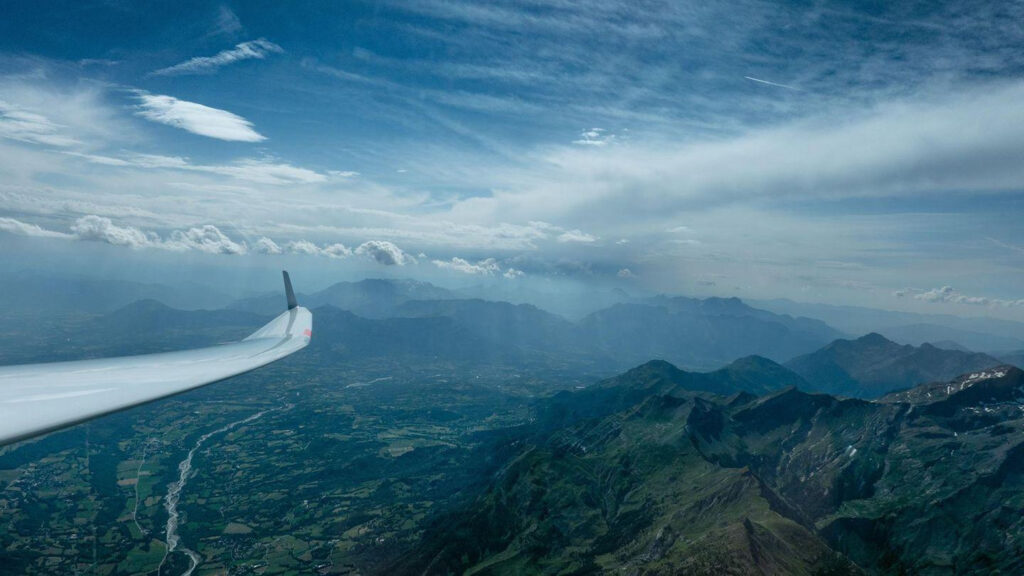
High-altitude flights introduce additional challenges. Air density decreases with altitude, temperatures can become extremely low, and the risk of hypoxia increases. Oxygen equipment and other high-altitude precautions may be necessary, depending on the altitude and applicable rules.
Pilots must also consider cloud, icing, airspace restrictions and the possibility of losing access to rising air.
Wave soaring’s impressive altitude potential should never be interpreted as a reason to exceed an aircraft’s limitations or a pilot’s training and equipment capabilities.
Is Wave Soaring Safe?
Wave soaring can be conducted safely by appropriately trained pilots when conditions, equipment and procedures are suitable. However, mountain wave systems can create hazards that demand careful planning and sound judgment.
Important risks include:
Strong downdrafts: Descending air may reduce altitude rapidly and may exceed the glider’s climb performance.
Rotor turbulence: Turbulence beneath the wave can be severe and difficult to predict.
Cloud and visibility hazards: Moist conditions can produce extensive cloud, potentially obscuring terrain or affecting the pilot’s ability to navigate visually.
Icing: In suitable atmospheric conditions, ice can form on the aircraft and affect its performance.
High-altitude exposure: Low temperatures and reduced oxygen availability can create serious physiological risks.
Terrain and airspace: Mountainous terrain, restricted airspace and high-altitude operating requirements must be included in flight planning.
The presence of a beautiful lenticular cloud does not make a flight safe. Pilots need to evaluate current forecasts, wind and temperature profiles, terrain, escape options, aircraft limitations and relevant regulations.
For additional background on wave-related aviation hazards, consult the FAA’s Glider Flying Handbook and the National Weather Service’s mountain wave overview.
Frequently Asked Questions About Wave Soaring
Conclusion: Why Wave Soaring Matters
Wave soaring demonstrates how a glider can use the atmosphere to reach heights that may seem surprising for an aircraft without an engine.
When wind crosses suitable terrain in a stable atmosphere, it can create mountain waves with extensive regions of rising air. Glider pilots can use this lift to climb, sometimes reaching remarkable altitudes. Lenticular clouds may reveal the waves, but cloudless wave systems are also possible.
The same atmospheric process can produce strong downdrafts and hazardous rotor turbulence. Understanding the difference between visible cloud patterns and the actual airflow is therefore essential.
For anyone interested in gliding, wave soaring offers a fascinating example of the relationship between terrain, weather and flight. It also shows why knowledge of meteorology is an important part of becoming a skilled glider pilot.
Explore more articles in Glider Airstrip’s Soaring & Thermals section to learn how different types of lift help sailplanes remain airborne.